Home / Services / Off track and bent sections
Garage door off track in Sarasota
Rolled out of the track or creased by a bumper. We take it apart properly.
- Taken apart, never forced back
- Track set plumb and shimmed
- Tickets written for insurers
- A roller out of its track at the bend.
- The vertical track bent where it was hit.
Before anything else
If the door is off its track
Don’t stand or drive under it
While the door is stuck or partly open, keep people, pets and cars out from under it.
Don’t pull the red release cord
If a spring has gone, the release lets the full weight of the door down at once.
Leave it where it is
Don’t run the opener to “see if it goes”. We come to it.
Is this you?
Signs a door has come off its track
A roller outside the track
Usually at the bend, or where a car clipped the vertical track.
A section creased or twisted
A bumper or a mirror has pushed it in, and it binds on the way up.
The door stops and reverses
The opener is refusing to force it. Good. Don’t turn it up.
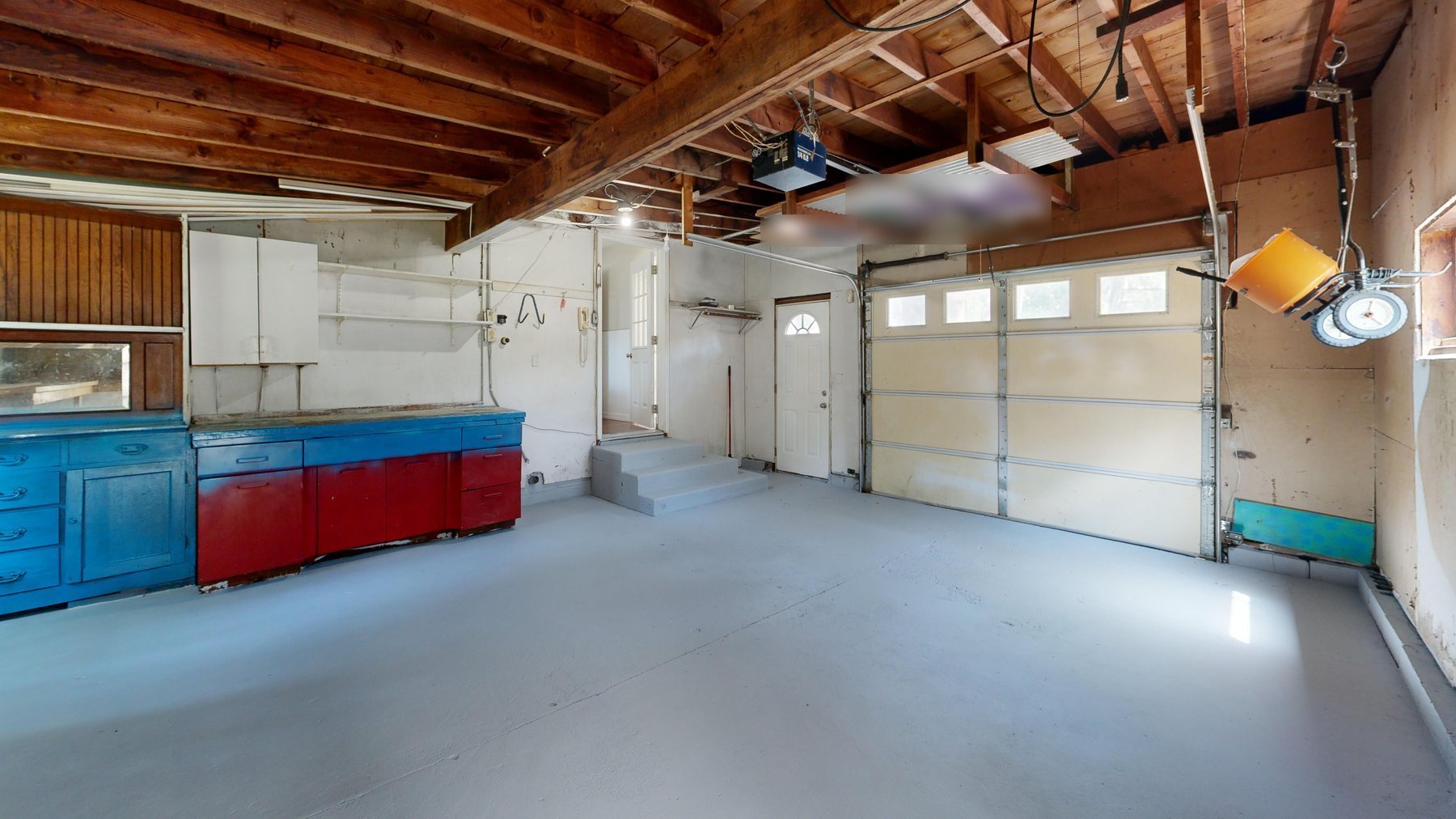
From the inside
Why it won’t simply pop back in
From inside the garage, the tracks run up the sides of the opening and back along the ceiling. A roller that has left its track at the bend has usually bent something on the way out.
So the door is supported, the damaged length of track comes off, and it goes back straight and plumb, shimmed off the jamb so it doesn’t bend again. Forcing a roller back in with the opener is how a section folds.
How we do it
How we put a door back on its track
Support the door
Clamped so nothing drops while the track is open.
Free the roller and the track
The bent length comes off, not hammered in place.
Straighten or replace
The track, and the section if it’s creased past saving.
Plumb, shim and test
Set square to the opening, then the reverse test with you watching.
What it costs
What an off-track repair costs
The visit is $89. A bent section is priced once we know whether its profile is still made.
Attend and diagnose
$89.00, including the balance test and both safety tests.
Door re-tracked, one side
$150 – $240, including straightening or replacing the damaged length of track and re-setting it plumb.
Vertical track replaced
$120 – $180 per side, fitted and shimmed.
Section replaced
Estimated once we know the maker and whether the profile is still made. If it is not, we will say so rather than fitting a near miss.
Vehicle damage
We will write the ticket in enough detail for an insurer, with the parts and labor separated. We do not inflate it for a claim.
The details
For the people who want every step
Why it will not simply go back
People do get a door back into its track with a crowbar, and it does sometimes stay there. The reason we take longer is that a door comes off for a reason, and putting it back without finding the reason means it comes off again, usually worse.
The track is a light steel channel. Once a roller has climbed out under load, the lip of that channel is normally spread or curled at the point of exit. Push the roller back in and it now runs through a section of track that is a different width from the rest, so it binds there every single cycle. Within weeks it will jump again, and the second time it usually takes the hinge or the end stile with it, because the section is being twisted rather than lifted.
How we do it
The door is clamped and supported so nothing can drop, and the opener is unplugged. Depending on where it came off, the spring may need to be unwound first. Then the affected section is taken out of engagement properly — rollers out of the track rather than the track pried off the roller — and the track itself comes down.
Damaged track is straightened on the bench where we can see what we are doing, or replaced if it is creased rather than bent. Then it goes back plumb, shimmed off the jamb rather than pulled tight against it. That last detail matters: garage jambs are timber, they move, and a track bolted hard to a bowed jamb inherits the bow. Shims let the track be straight even when the jamb is not.
Finally the door is run by hand, slowly, all the way up and down, watching the rollers through the radius bend, before the opener is reconnected.
Damaged sections
If a vehicle hit the door, the question is whether the section can be replaced or whether the door is finished. Three things decide it.
Is the model still made?
Section profiles change. On a door under about ten years old there is a fair chance of getting a matching section. On an older one, often not, and a section that nearly matches looks worse than a new door.
Has the finish moved?
A new section in the middle of a sun-faded door is obvious from the street. Sometimes that is fine — it is a garage door — and sometimes it is not, and you should be told before you pay for it rather than after.
Did the end stiles take it?
The vertical stiles at each end of a section carry the hinges and the roller brackets. If those are twisted, replacing the skin does not fix the door, because the geometry is gone. That is normally the point at which a new door is the honest answer.
The bend is where doors die
Almost every off-track failure happens at the radius — the curved piece where the vertical track turns into the horizontal. It is where the door changes direction, where the roller is most loaded, and where a worn roller or a slightly wide track shows up first.
So when we are there for anything else, that is the first place we look, and it is why a tune-up is not a make-work visit. A roller that is starting to skid at the bend makes a specific noise for months before it climbs out.
Questions
What people ask us about this
My door opens about six inches and stops. Is the opener dying?
Almost never. Six inches and stop is usually one of two things, and neither is a dead opener. Either the up-travel limit is set wrong, so the opener believes the door is open, or the door is binding in the first few inches and the opener is reversing off the resistance. That is the safety system doing its job. We tell the two apart with the opener disconnected and the door checked by hand, so please don’t turn the force up to push through it.
Do you charge to come out?
Yes, $89, and we say it on the phone before you agree to anything. It covers the visit, the diagnosis, the balance test and the safety reverse test, whether or not you go ahead with a repair. A free call-out is never free; it just gets filed somewhere else on the bill.
How long does a spring replacement take?
On a standard home door with the spring on the truck, about forty-five minutes to an hour, including balancing the door and running both safety tests. What adds time is a cable or drum damaged when the spring let go, which is why we look at both before we price the job.
Want somebody to look at it properly?
Tell us what the door is doing. The owner calls you back with the visit price, and nothing is fitted before you’ve agreed the figure.
Other work