Home / Services / Cables and drums
Garage door cable repair in Sarasota
A door hanging crooked is a cable off its drum. Keep clear, and leave it where it is.
- Door clamped and supported
- Both drums set to the same mark
- Cables fitted in pairs
- The low side: a cable has come off its drum.
- The high side is still held by its cable.
Before anything else
If the door is hanging or stuck
Don’t stand or drive under it
While the door is stuck or partly open, keep people, pets and cars out from under it.
Don’t pull the red release cord
If a spring has gone, the release lets the full weight of the door down at once.
Leave it where it is
Don’t run the opener to “see if it goes”. We come to it.
Is this you?
Signs a cable has come off
One side hangs lower
The door sits crooked in the opening, or stopped part-way.
A slack cable at the drum
Loose wraps on one drum at the top corner of the door.
It came down onto something
A bin or a bike under the door is the usual start: one corner stopped, the drum kept turning.
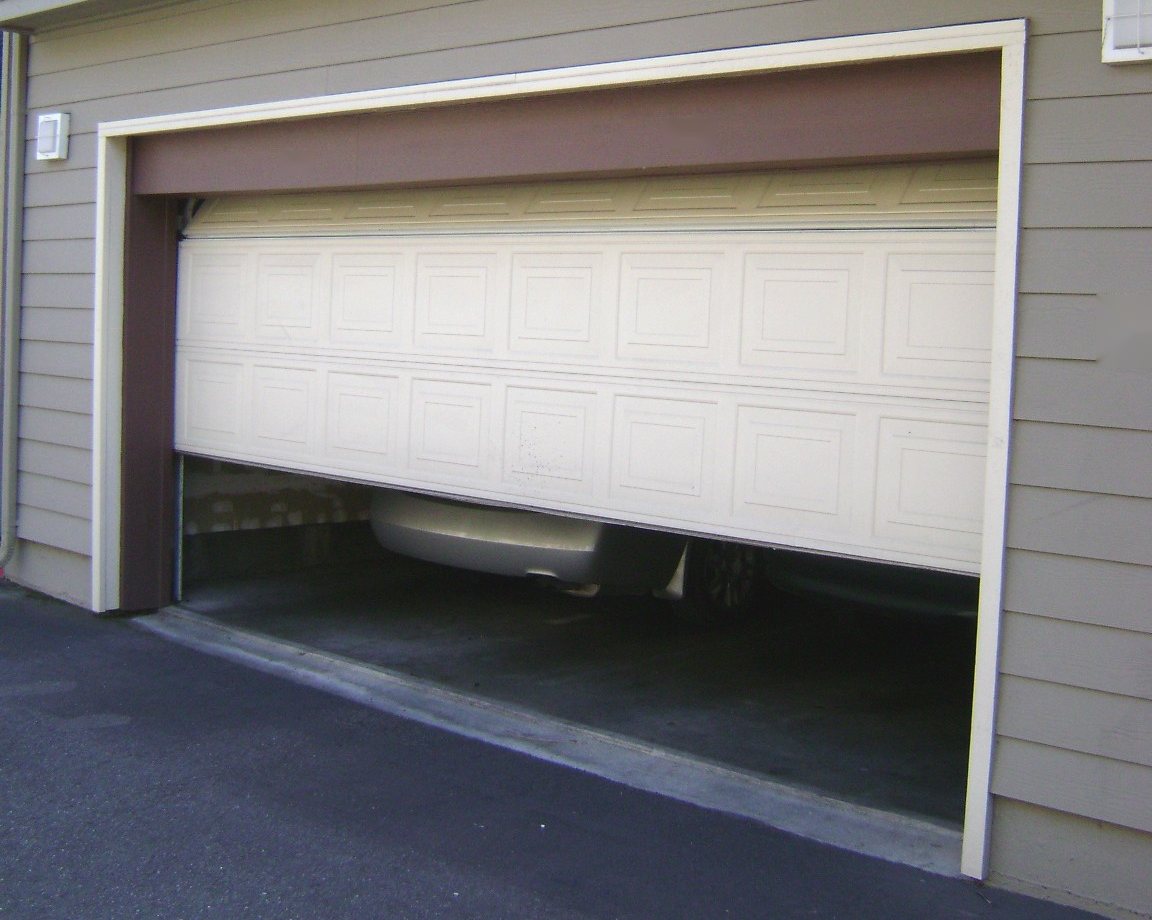
What it looks like
A door stuck part-way is a door under strain
When one corner stops and the other keeps going, the wraps on that drum go slack and the cable jumps its groove. From outside it looks like this: a door stopped part-way, sitting out of line.
Don’t run the opener to straighten it. That usually pulls the other cable off too. Keep people and cars clear, and leave it where it is.
How we do it
How we reseat the cables
Clamp and support the door
So nothing can drop while the tension is managed.
Take the load off the spring
With winding bars, the same way we would on a spring job.
Re-seat both cables
Both drums wrapped to the same mark, so the door comes up level.
Check the brackets and test
Bottom brackets looked at, then the reverse test with you watching.
What it costs
What cable and drum repair costs
The visit is $89. Cables are fitted in pairs, because a new cable beside a worn one is half a job.
Attend and diagnose
$89.00, including the balance test and both safety tests.
Re-seat both cables and set the drums
$110 – $160, door clamped and supported, both sides set to the same mark.
Pair of lift cables replaced
$70 – $95 fitted. We fit them in pairs. A new cable next to a twenty-year-old one is half a job.
Drum replaced
$60 – $85 each where one has been chewed by a loose cable.
Bottom bracket
$45 – $70 where it has been bent or the pin has worn.
The details
For the people who want every step
What a drum actually does
At each end of the torsion shaft is a grooved aluminum drum. The lift cable runs from a bracket at the bottom corner of the door, up the inside of the track, and wraps into the spiral groove of the drum. As the spring unwinds and turns the shaft, both drums wind their cables in at the same rate, and that is what lifts the two bottom corners of the door together.
The important word is together. Both drums are set on the shaft so that the cable tension and the number of wraps match. If one drum is off by even a wrap, one corner of the door leads the other all the way up, the door racks in the opening, and it grinds through the track, chews the rollers and eventually walks the top section out of line.
How a cable comes off
The usual sequence: the door is closing, and it lands on something. That corner stops. The shaft does not — the spring keeps turning it for a moment — so the drum keeps paying out cable that has nowhere to go. The slack loops, and when the door is next lifted, the cable takes up somewhere other than its groove, or jumps off the drum entirely.
This is also why a broken spring so often takes a cable with it. The door drops, the cables catch the whole weight at once, and the shock either unseats them or damages the wire.
Why the repair is not a quick one
Getting a cable back on means dealing with the spring tension that is still in the system. The door has to be clamped in the track and supported. In many cases the spring has to be unwound and rewound with bars. Then both drums are set, both cables tensioned equally, and the door run and checked for level and for the two bottom corners sealing together on the floor.
It is not a job to improvise, and it is not one to leave, because a door running on one good cable is destroying its own track.
The cable itself
Lift cables are galvanized aircraft cable, sized for the weight of the door, with a stop swaged on one end and a loop that hooks over the pin on the bottom bracket. They fail in three ways and all three are visible if you look.
Fraying and bird-caging
Individual strands lift away from the lay of the wire, so a section of the cable looks fatter and fuzzier than the rest. Once you can see this, the cable is finished. It costs very little and it is the single cheapest thing to be proactive about on a garage door.
Rust at the bottom
The last eighteen inches of cable sit near the floor, in the water and grit that comes under the seal. That is where they rust, and a cable rusted at the bottom bracket can look perfect from six feet up.
Kinks
A cable that has been over-wrapped or crushed has a permanent bend. It will fail at the kink, because that is where the strands have already been overloaded.
The bottom bracket
Worth a specific warning. The bracket at the bottom corner of the door, where the cable hooks on, is under the full lift load whenever the door is down. It is sometimes called the most dangerous bracket on a garage door for exactly that reason — undoing its bolts with the door closed and the spring wound releases that load. It is not a bolt to loosen out of curiosity.
While we are there
Cables and drums both live in the same corner of the door as the rollers and the bottom seal, so the sensible thing is to look at all of it in one visit: roller condition, track alignment, whether the bottom section is rusting from the inside, and whether the door still seals flat on the floor across its whole width once the cables are set equally.
Questions
What people ask us about this
One side of the door is hanging lower, and a cable is slack. What do I do?
Stop using the door, keep clear of it, and leave it where it is. A cable has almost certainly come off its drum. Don’t run the opener to try to straighten it; that usually pulls the other cable off too. It needs the door clamped and supported and both cables set to the same mark.
How long does a spring replacement take?
On a standard home door with the spring on the truck, about forty-five minutes to an hour, including balancing the door and running both safety tests. What adds time is a cable or drum damaged when the spring let go, which is why we look at both before we price the job.
Do you charge to come out?
Yes, $89, and we say it on the phone before you agree to anything. It covers the visit, the diagnosis, the balance test and the safety reverse test, whether or not you go ahead with a repair. A free call-out is never free; it just gets filed somewhere else on the bill.
Want somebody to look at it properly?
Tell us what the door is doing. The owner calls you back with the visit price, and nothing is fitted before you’ve agreed the figure.
Other work