
Commercial garage door repair in Sarasota
Rolling steel and dock doors, budgeted for, not panicked over.
Is this you?
Signs a commercial door needs attention
A dock door that hangs up
Forty cycles a day finds every worn roller and every bent track.
A safety edge that doesn’t stop it
A reversing edge or light curtain that fails is a door to take out of use.
No idea when the springs are due
Springs are a budget line when you know the count.
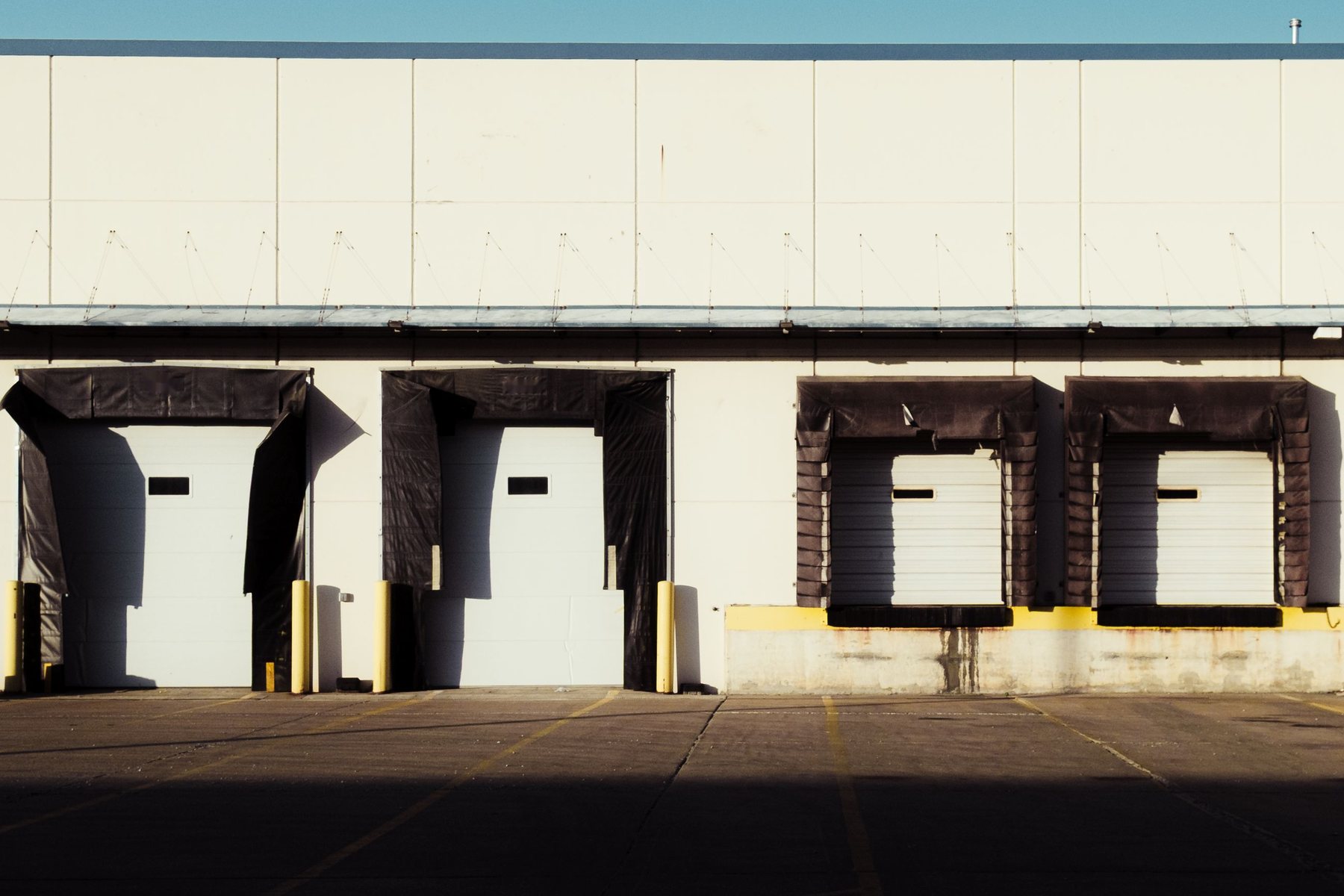
Scheduled, not reactive
Cycles are the budget
A home door might run 1,500 cycles a year. A busy dock door can do that in a few weeks. So the springs are sized to your real daily count, and the quote states the date we expect them to need replacing.
Rolling steel, sectional dock doors and jackshaft operators each get a line on a schedule, with the wear parts logged per door, so next year’s budget is a number rather than a hope.
How we do it
How a commercial service goes
Count the cycles
From the operator’s counter, or from your day.
Test every safety device
Reversing edges and light curtains, at every visit, whatever we came for.
Log the wear parts
Springs, rollers, slats and cables, per door.
A schedule and a number
The next visit and next year’s likely spend, in writing.
What it costs
What commercial door work costs
Commercial visits are $129 to look. Springs are quoted against your cycle count, with the expected replacement date on the quote.
Attend and diagnose
$129.00 for commercial, including a full safety device test and a written condition note per door.
High-cycle springs
Quoted against your actual daily cycle count, with the expected replacement date stated on the quote.
Rolling steel slat replacement
Quoted per slat and per curtain. Forklift damage is usually a handful of slats rather than a curtain.
Reversing edge or light curtain
Quoted per opening. Tested at every visit whether or not it is what we came for.
Scheduled maintenance
Priced per door per visit, with the wear parts logged so next year's budget is a number rather than a hope.
The details
For the people who want every step
Cycles are the budget
On a house, a spring's cycle rating is a rough guide to how many years you get. On a commercial door it is a line item you can actually forecast.
Count the door's real traffic for a week — most operations know it or can guess within twenty per cent. Forty cycles a day is roughly 14,000 a year. Against a 10,000-cycle spring that is a failure inside a year; against a 100,000-cycle spring it is seven. High-cycle springs on commercial doors are not an upsell, they are the difference between planned maintenance and an unplanned shutdown with a truck waiting outside.
We will put the number on the quote: the rating fitted, your estimated daily cycles, and the expected replacement date that falls out of the two. Then it is a maintenance schedule instead of a surprise.
Rolling steel is a different animal
A rolling steel door is not a sectional door with different panels. The curtain is interlocking slats that roll onto a barrel above the opening, and the counterbalance spring lives inside that barrel. Tension is adjusted at the barrel end, and the whole assembly is heavier and less forgiving than residential torsion gear.
Common faults are different too: slats that have been bent by a forklift and need individual replacement, guides packed with debris, bottom bars that have been struck and no longer sit square, and a curtain that has been forced when the tension is wrong.
Safety on a commercial door
The residential reverse test is not the whole story here, because commercial doors have different control types and different rules attached to them.
Constant pressure
Many commercial installations run on a three-button station where closing is constant-pressure: the door only moves while somebody is holding the button and can see the opening. That is a deliberate safety design, and defeating it by taping a button down is an old trick that turns the door into a hazard.
Reversing edges and light curtains
A pneumatic or electric edge along the bottom bar reverses the door on contact. A light curtain covers the whole opening rather than a single beam. Both are tested on every visit, and both fail quietly — an edge with a cracked hose still looks perfectly fine.
The same refusal applies
We will not increase the closing force, disable an edge, bypass a curtain or bridge a photo-eye so that a door keeps working through a fault. On a dock with people and equipment moving under the opening, that is a considerably worse idea than it is on a driveway. If a door cannot be made to pass its safety tests, it goes out of service until it can, and that goes on the paperwork.
Scheduled rather than reactive
For anything above a handful of cycles a day, the sensible arrangement is a scheduled visit — quarterly or twice a year depending on traffic — where every door is checked, the wear parts are logged, and replacements are ordered before they are urgent. It is cheaper than emergencies and much cheaper than a door that cannot close at the end of a shift.
Two trucks means we are honest about capacity. We take on the number of buildings we can genuinely cover, and when we are at that number we say so.
Questions
What people ask us about this
Do you work on commercial doors?
Yes: rolling steel, sectional dock doors and jackshaft operators. Those doors cycle dozens of times a day, so the sensible approach is a service schedule rather than a phone call at eight on a Monday.
My door won’t close and the opener light is blinking.
That is nearly always the photo-eyes near the floor. Something is in the beam, one has been knocked out of line, a lens is dirty, or low sun is shining straight into one. Wipe both lenses and check each one points at the other. What we never do is disconnect the eyes to make the door close.
What is a cycle rating, and which spring should I get?
A torsion spring is rated in cycles, and one cycle is one open and one close. A standard spring is around 10,000 cycles; a high-cycle spring is 25,000 or more. A household that uses the door four times a day runs about 1,500 cycles a year, so that is roughly seven years against sixteen. We fit high-cycle by default, and a standard spring if you ask. The rating goes on your ticket either way.
Want somebody to look at it properly?
Tell us what the door is doing. The owner calls you back with the visit price, and nothing is fitted before you’ve agreed the figure.
Other work