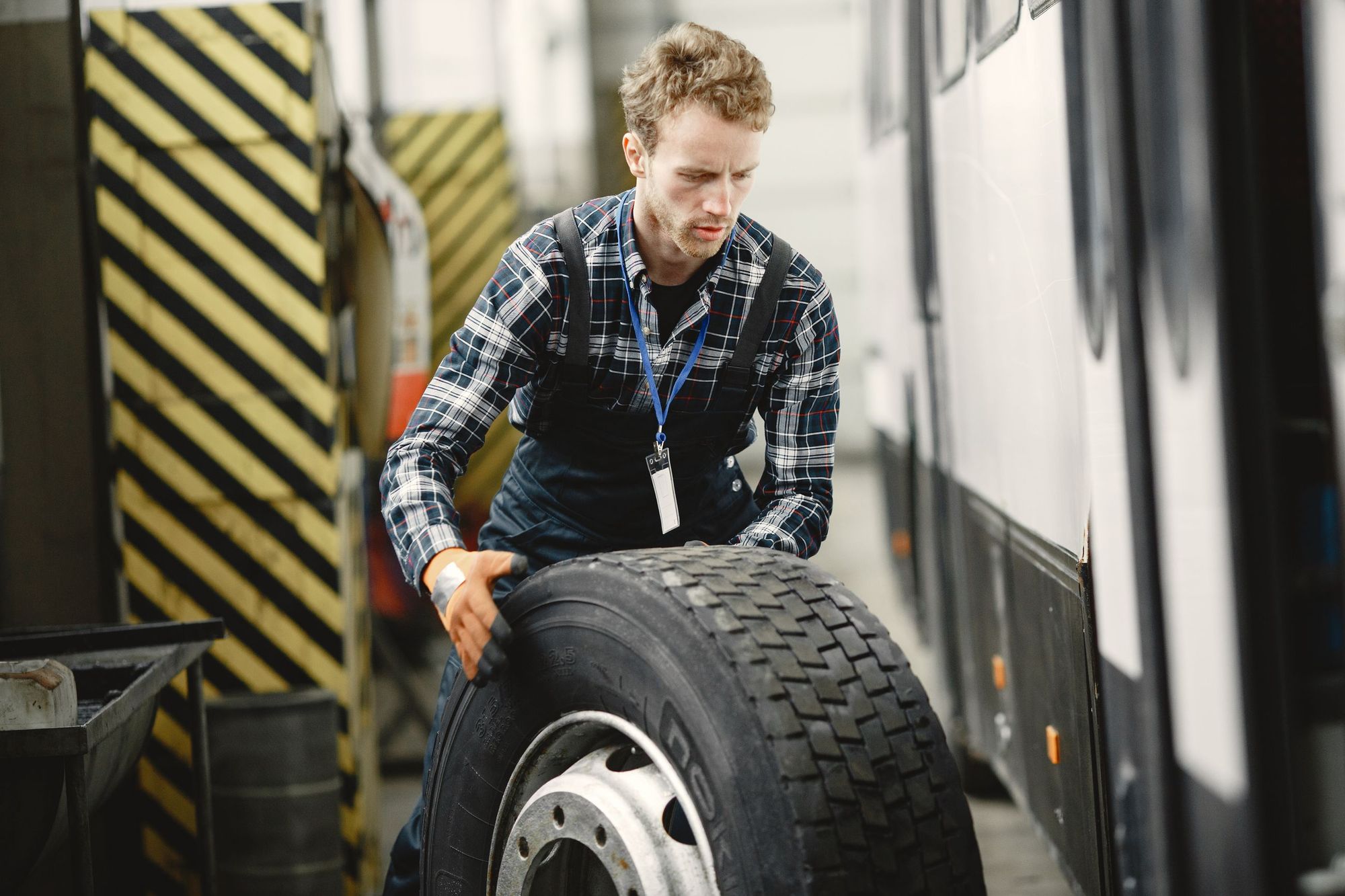
RV tires, bearings and brakes in Sarasota
Date codes read, axles weighed, bearings repacked by hand with new seals, and brake shoes and magnets measured. The running gear has no warning light, so we look.
The running gear
Where an RV actually fails
It’s the part with no gauge, no warning light and no noise until it’s already expensive. All three numbers on this page are ones you can check yourself.
- The date code decides. The four digits after DOT are the week and year it was built. RV tires age out before they wear out.
- Weigh it, don’t guess it. The sidewall pressure is for the tire’s maximum load, which your rig isn’t carrying.
- Bearings annually or every 12,000 miles. A dry trailer bearing announces itself by seizing, usually at speed.
On the log, every time
What you can check today
Industry guidance from the tire makers is to replace RV tires on age, commonly five to six years, regardless of tread.
Week, then year.
Week 34 of 2021.
Not tread depth.
And the maker’s table.
Or 12,000 miles, or after water.
Every repack, every time.
Measured with a gauge.
After the first 50 miles.
A proper repack
Pulling the hub, cleaning the old grease out completely, inspecting the cone and cup for pitting, scoring and brinelling, packing by hand so grease is forced between every roller, fitting a new seal and setting the preload properly. A seal costs a few dollars and is the only thing between your grease and your brake linings.
Why the grease zerk isn’t the same thing
Pumping grease in tells you nothing about the races, and done carelessly it pushes grease past the inner seal onto the shoes. Contaminated linings don’t clean up. If your axles have zerks and have never been opened, that’s worth knowing before a long trip.
Brakes, measured
Electric trailer brakes wear at both ends: the shoes, and the magnets dragged across the drum face. We measure both, check the drum for scoring, and confirm each magnet actually draws current. A brake that’s mechanically perfect and electrically dead does nothing.
The re-torque nobody mentions
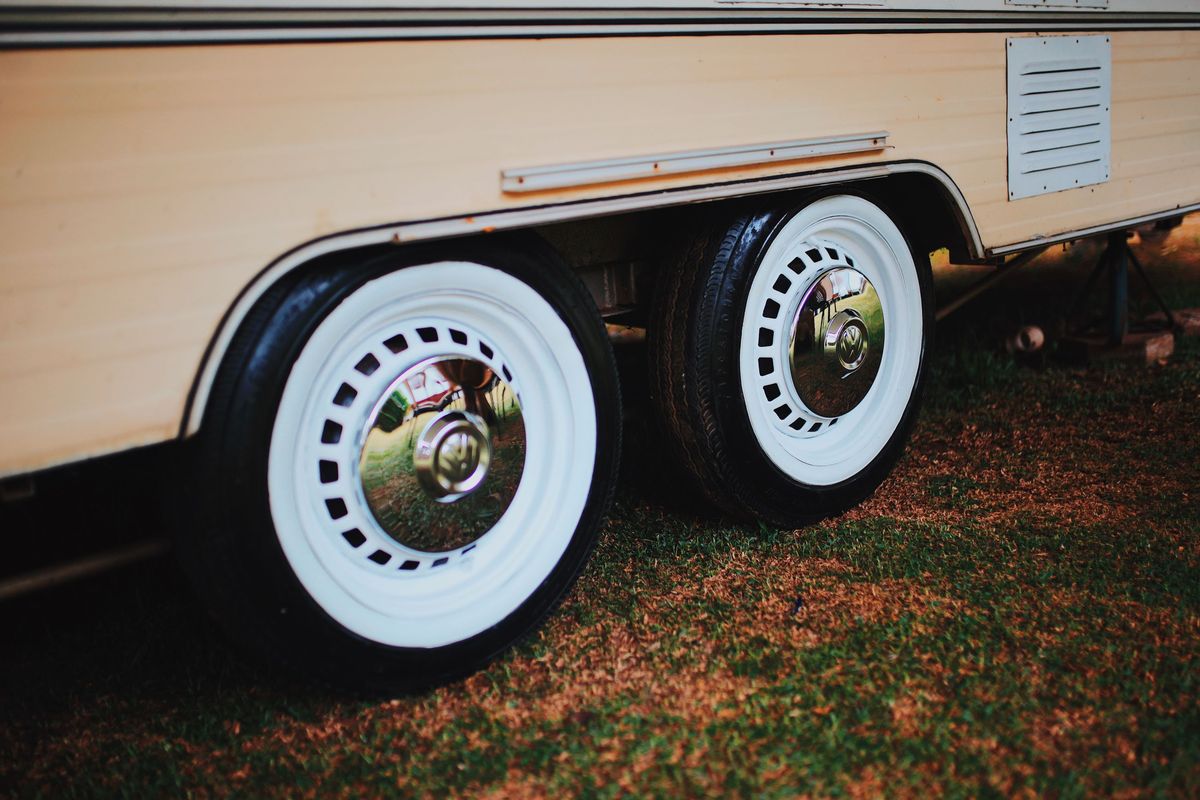
Lug nuts settle after a wheel has been off. They need re-torquing after the first fifty miles or so, in the right pattern. The figure and the interval go on your sheet.
What we won’t sell you
Running-gear jobs we turn down
Six tires on tread
Recent date codes and clean sidewalls mean the tires stay. We read you the codes.
Shoes without magnets
A worn magnet drags current and stops little. New shoes on old magnets is half a brake job.
A bearing “top-up”
Grease through a zerk is not an inspection. We open the hub and look.
Straight answers
Tire and bearing questions
So how old is too old for an RV tire?
The tire makers and the NTSB commonly put it at five to six years, regardless of tread. A trailer tire spends its life parked and loaded in the sun and fails from the inside out.
Why weigh the rig to set pressure?
Correct pressure depends on the load on each axle, looked up in the maker’s table. Set from weight, a rig tows straighter, wears evenly and runs cooler, and heat is what kills RV tires.
My trailer sat all summer. What first?
Bearings and brakes before anything else. Grease has a service life whether the trailer moves or not, and the bearing that hasn’t turned since spring is the one that lets go eighty miles from home.
The rest of the walk
Other work on the rig

Sarasota · Sarasota County
Have the hubs opened before the long run
Bring the trailer in, or tell us where it’s stored. We’ll tell you whether it needs the bay.