RV electrical and battery repair in Sarasota
Shore power, the converter and the inverter are three different systems that all end at a socket. Knowing which one failed is most of the repair.
Three systems, one socket
Diagnosis before parts
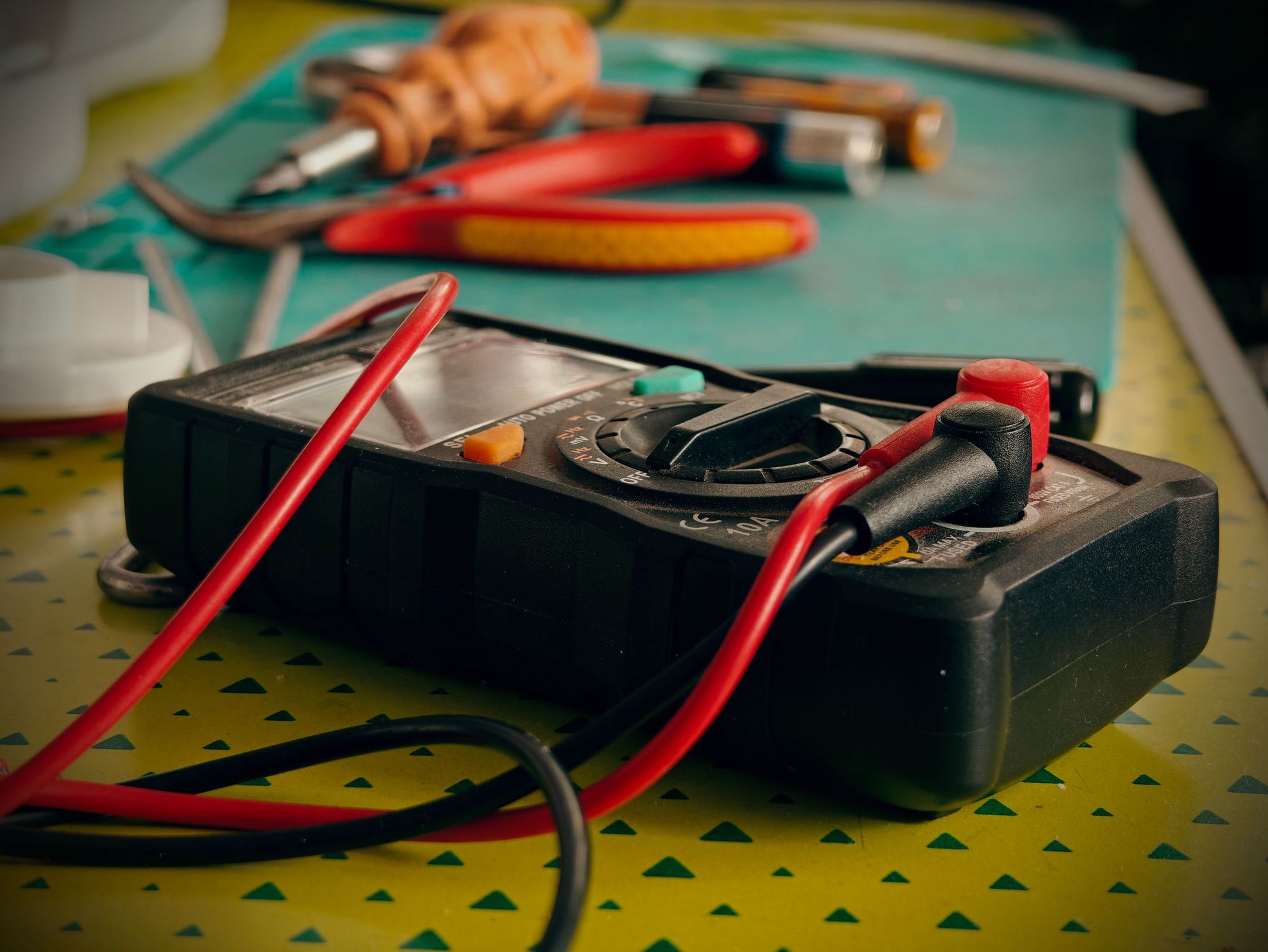
We test the pedestal before blaming anything inside, measure the charger before selling batteries, and map which outlets are on the inverter before calling it faulty.
- Shore power. Pedestal, cord, breaker and transfer switch. A loose neutral at a campground does real damage.
- The converter. Mains to 12 volt, and it charges the house bank. When it fails, things are dim by the third evening.
- The inverter. Battery to mains, for only some outlets. Half the “inverter faults” are outlets never wired to it.
On the log, every time
How we test
Each reading goes on the log, so a new battery isn’t fitted to a charger that killed the last one.
Before anything inside.
Browned, pitted blades.
Tested under load.
Bulk, absorption, float.
Which outlets, written down.
Volts under load.
Clamp meter, not a guess.
Charger profile to battery.
Batteries fail under load, not at rest
A tired battery shows a respectable resting voltage and collapses the moment anything asks for current. That’s why we load-test each battery on its own: a bank tested as a bank hides the weak one, and the weak one drags the good ones down.
Parasitic draw
The commonest “my batteries are shot” call isn’t the batteries. It’s a rig in storage with something quietly awake: a propane detector, stereo memory, a control board. Those draws flatten a bank over a summer, and a lead-acid battery left flat doesn’t fully come back. We clamp the draw, find what’s awake, and talk about a disconnect or a small solar maintainer.
Lithium is a charger job too
Flooded, AGM and lithium want different voltages. Fitting lithium to a rig whose converter was built for flooded cells means the converter is part of the job, not just the batteries.
Thirty amp or fifty?
Thirty is a single leg; fifty is two legs and roughly four times the power. An adapter lets you plug in. It doesn’t give you the power, and a lot of tripped breakers come from expecting it to.
Three questions to ask any shop
- Did you test it under load?
- What’s the charging voltage?
- Which outlets are on the inverter?
What we won’t sell you
Electrical parts we won’t guess at
Batteries for a bad charger
A converter at the wrong voltage kills a new bank as surely as the old one.
A matched pair by default
One failed battery, close in age and chemistry to its mate, gets replaced alone.
A part before a trace
We won’t price a part over the phone for a fault nobody has traced.
Straight answers
RV electrical questions
What’s the difference between shore power, the converter and the inverter?
Shore power is the mains supply from the pedestal. The converter turns it into 12 volt and charges the batteries. The inverter turns battery power back into mains for a few chosen outlets.
Is 30 amp the same as 50 amp with a different plug?
No. Thirty is a single leg; fifty is two legs and roughly four times the power. An adapter lets you plug in; it doesn’t give you the power.
My batteries die in storage. Are they bad?
Often it’s parasitic draw, not the batteries. We measure it with a clamp meter and find what’s awake.
The rest of the walk
Other work on the rig
Sarasota · Sarasota County
Get it traced, not guessed
Bring the rig in, or have the van come to the lot. Either way it’s traced from the source.