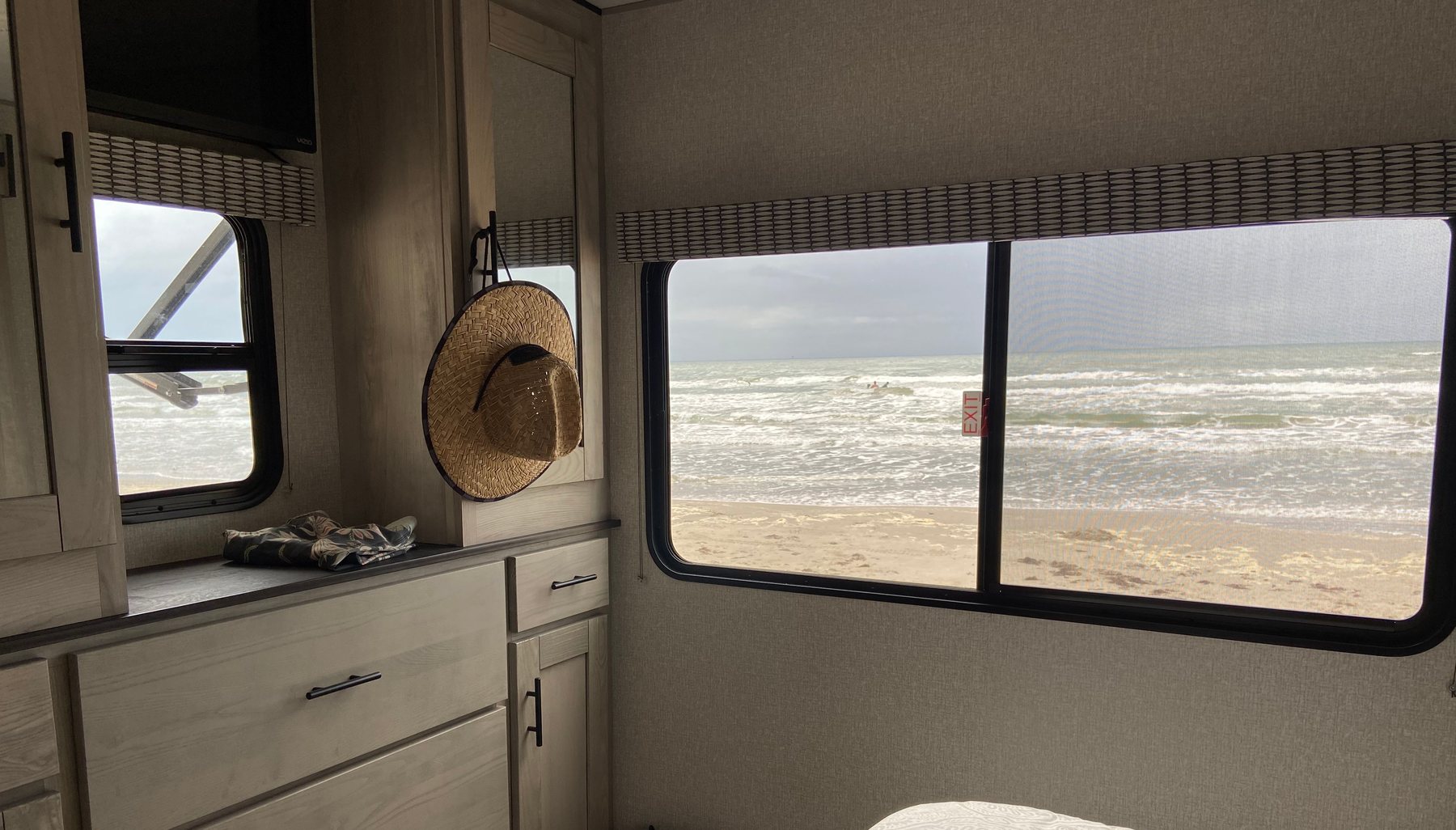
RV slide-out repair in Sarasota
The seal is the maintenance. The wall is what it protects. Bulb and wiper seals cleaned and treated, the room run in square, and every seal written down by name.
Two seals, two jobs
Cheap to look after, costly to ignore
What a slide seal protects is the wall around the opening, one of the worst places on a rig for water to get in. Neither failure looks dramatic, which is exactly why it’s maintenance.
- The bulb seal squashes against the sidewall when the room is in. It fails by going hard and not springing back.
- The wiper seal rides on the moving room and sweeps it clean. It fails by hardening and scraping instead of wiping.
- The right dressing. A rubber-seal treatment, never something oily. Petroleum swells the rubber and it tears.
On the log, every time
Written separately, each one
“Slide seals: OK” on somebody’s sheet isn’t an inspection. There are at least four, and they fail differently.
Or taken a set.
Or scrapes the skin.
Where water actually gets in.
Alignment, anything bent.
Gap measured top and bottom.
A vertical joint.
Slack pools water; torn leaks.
Checked at the opening.
Don’t grease what should stay dry
Which parts of a slide want lubrication depends on the type. The popular through-frame systems that run on toothed tracks in the walls are designed to run dry; spray grease in and it becomes a grit magnet ground into the track. Rack-and-pinion and hydraulic systems have their own points and products. Getting this wrong is common, and the damage takes a year to show.
Sync, and why a slide goes out of square
Most slides are driven at two points. If those stop moving together, the room comes in skewed, and a quarter of an inch is enough. The seal is crushed at one end and barely touching at the other, and the end that’s barely touching is where the water goes. We run the room, measure the gap at both ends, and resync to the maker’s method. Not by leaning on it.
The line that says do nothing
Line 10 on our example log: wiper on the curb side compressed but sealing. Watch, don’t replace. That’s a real state a seal can be in, and the one most often sold as a replacement.
What we won’t sell you
Slide work we won’t do
Seals replaced on sight
A compressed seal that still seals is a “watch” on the log, not a line on the invoice.
Spray lube on a dry track
It turns a clean track into grinding paste.
Forcing a stuck room
A sticking slide gets measured and synced, not pushed.
Straight answers
Slide-out questions
The seals look fine. Why treat them?
Because the failure isn’t visible until it’s expensive. A dried bulb stops springing back at the top corners where water runs. Half an hour, twice a year, buys years.
My slide comes in crooked. What causes that?
The two drive points have stopped moving together. We measure the gap at both ends and resync to the maker’s procedure.
Do slide toppers matter?
Yes. A slack topper pools water on the slide roof, and that water finds the seam at the back of the box. A torn topper is usually cheaper than the sealant work it prevents.
The rest of the walk
Other work on the rig
Sarasota · Sarasota County
Have the seals treated before the season
Half an hour of maintenance protects the most water-prone opening on the rig.