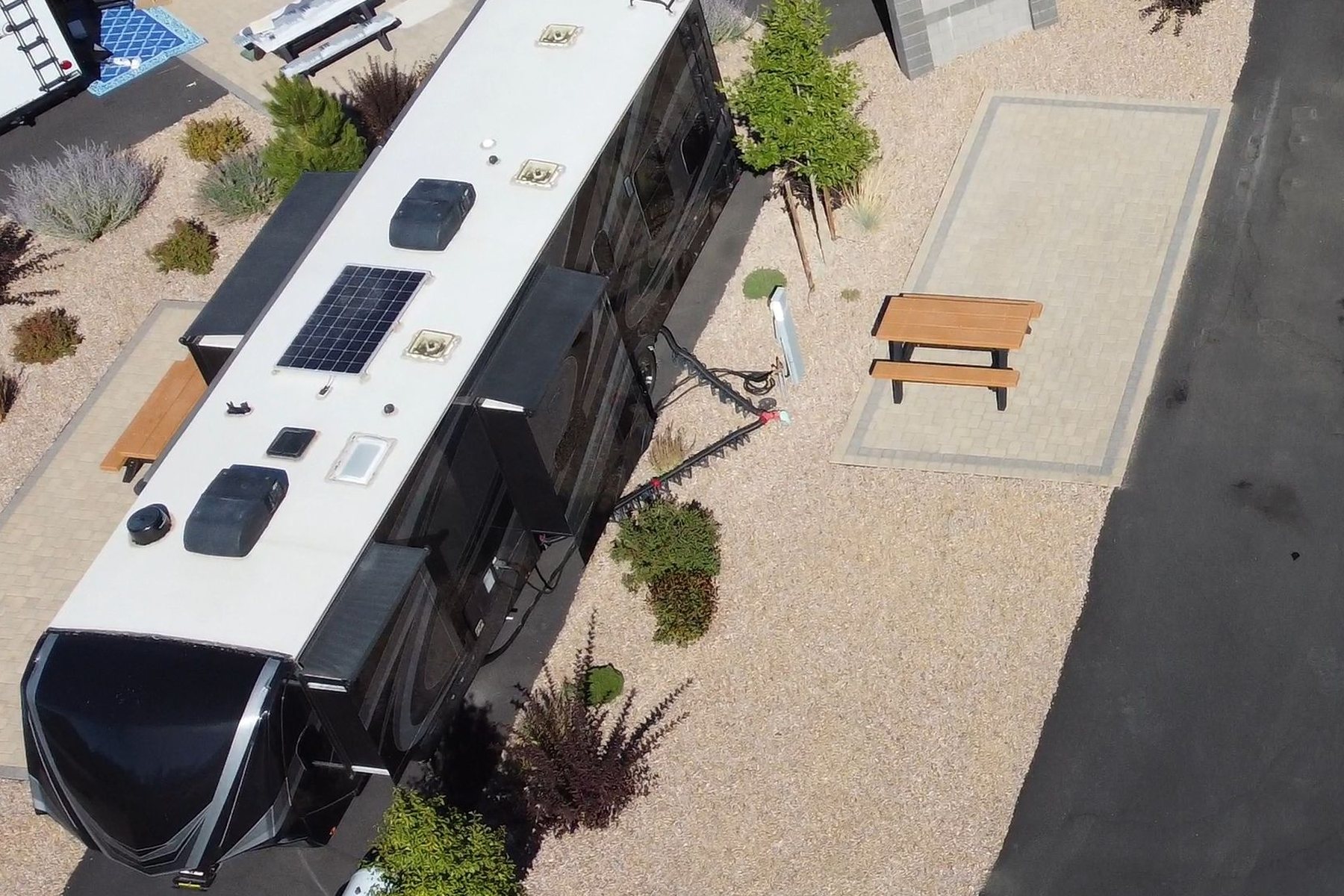
RV roof and sealant repair in Sarasota
Reseal what has failed and leave what hasn’t, before water finds the gap. Every vent, fan, A/C flange and seam checked one by one, with a count on the log.
A roof is a schedule
Not a surprise you find on the ceiling
Sealant is a maintenance item with an inspection interval. By the time a brown ring shows on the ceiling, the decking under the membrane has usually been wet for months.
- Twice a year, and after anything hits it. In Florida a roof gets a full year of sun and heat without ever leaving the storage lot.
- The holes fail first. Vents, fans, the A/C shroud, the fridge vent, the antenna and ladder mounts: each is a hole held shut by a bead.
- The right product for the joint. Self-leveling on flat penetrations, non-sag on vertical seams. Mixing them up is the commonest bad repair we see.

On the log, every time
What a roof check writes down
A count of penetrations and the state of each one, so you and the next shop can see what was done and what was left.
Chalking, tears, seam lift.
Any soft or springy patch.
Cracked, lifting or sound.
Non-sag sealant, vertical joints.
The cheapest job, most often skipped.
Gasket and bolt-down.
Hose test, not a guess.
Done, left, and why.
What resealing actually involves
The old sealant comes off, properly, down to the flange. The surface gets cleaned with something the membrane will tolerate. Then the correct product goes on in the right weather: not in wind, and not on a roof too hot to kneel on, because a sealant that skins in seconds doesn’t bond. That’s why most of our roof work happens early in the morning.
When we say no
We’ll tell you plainly when a roof doesn’t need resealing yet, and we say it in writing. If two penetrations out of six are cracked and lifting, we do those two and note that the other four were inspected and left. A whole-roof reseal on a sound roof is one of the easiest big invoices in this trade, and one of the least defensible.
And when the honest answer is worse
Sometimes a repair only buys time: a membrane chalking across the whole roof, or decking already soft in a corner. When that’s the case it goes on the estimate in those words, so you can decide between a patch and planning a re-roof.
Signs worth a call
- Any stain on a ceiling, however small or dry.
- A soft or springy patch on the roof.
- Sealant crazed, chalky or lifting at an edge.
- A branch strike, or anything dropped on it.
- A vent lid gone brittle and cracked.
Never pressure-wash a seam
A washer lifts the edge of a bead you’d otherwise get years out of. Soap, a soft brush and a hose.
What we won’t sell you
Roof work that sounds thorough and isn’t
A reseal priced by the foot
Ask how many penetrations will be done and which failed. A count is maintenance; an area is a sales figure.
A new bead over an old one
Fresh sealant laid on failed sealant traps water under both. The old bead comes off first.
A re-roof for two bad vents
If the membrane and deck are sound, two flanges get two repairs.
Straight answers
RV roof questions
How often should an RV roof be checked?
Twice a year and after anything heavy hits it. Ten minutes with a flashlight at every penetration catches nearly everything that later costs thousands.
Why is the stain not under the leak?
Water tracks along a rafter or the top of a wall before it shows, so the wet spot is rarely under the hole. We hose test from the bottom up rather than guess.
Can you do roof work at my lot?
Inspections, yes. Small sealant repairs only in the right conditions: no wind and a roof cool enough to kneel on. Otherwise it waits for an early morning or the bay.
The rest of the walk
Other work on the rig

Sarasota · Sarasota County
Get the roof looked at on a date you chose
The cheapest roof job is the one you asked for in advance. The most expensive one starts with a stain.