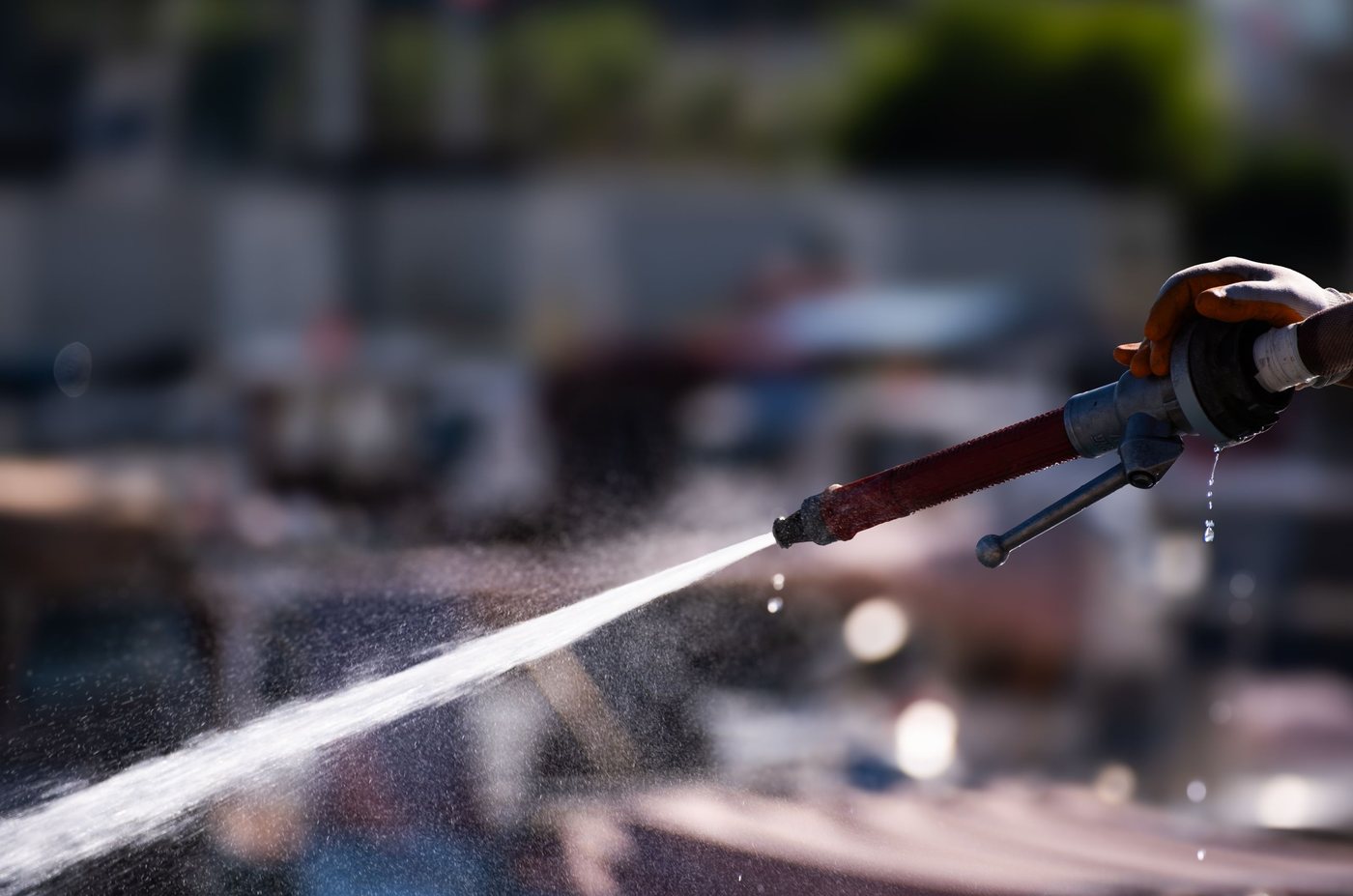
Hydro jetting in Casselberry
Water at pressure scours the whole pipe wall, grease and scale included. We jet once a camera has shown the pipe can take it.
Is this you?
When jetting is the right tool
Grease in a kitchen line
Grease coats the wall. A cable punches a hole; a jet takes the coating off.
A long line that slowly lost its size
Sludge and paper build-up along a flat run, cleaned back to full size.
After roots have been cut
Washing the cuttings out so they don’t pack together in the low spots.
How we do it
How we jet a line
Camera first
We check the pipe can take it. An open joint or paper-thin cast iron means no jet today.
The right nozzle
Rear-facing jets pull the hose up the line and scour the wall on the way back.
Flow, not just pressure
Pressure cuts the plug; the flow carries it away instead of leaving it further down.
Camera after
You see the clean wall on the screen, and it goes on your run sheet.
What it costs
What jetting costs
Jetting is priced after the camera run, because the line’s length and condition decide the job.
The camera run
One price, given on the phone, and it tells us whether jetting is safe at all.
The jetting
Priced by the length of the run and what’s on the wall, in writing before we start.
Where it drains to
Onto a city main is simple. A septic tank has to be ready to take what comes off the wall.
The details
For the people who want every step
How it is different from a cable
A jetter sends water down a hose to a nozzle with jets angled backwards. Those rear jets pull the hose up the pipe against the flow, and on the way back down they scour the wall for the full circumference. That is the difference: a cable makes a passage, a jet restores a diameter.
Two numbers describe a jetter and people quote the wrong one. Pressure — psi — is what cuts through a plug. Flow — gallons per minute — is what carries the debris away once it is cut. A high-pressure, low-flow machine will punch a hole in a grease plug and leave the material in the pipe. On a four-inch residential line, flow is usually the thing that decides whether the job holds.
What it is right for
- Grease. Kitchen and restaurant lines, where the problem is the wall and not the middle.
- Sludge and paper build-up in a long, flat run that has slowly lost diameter.
- Sand and silt, which cable straight through and leave behind.
- Scale in cast iron, with the right head — and usually after a chain knocker rather than instead of one.
- Roots, after they have been cut, to wash the cuttings out instead of leaving them in the low points.
What it is wrong for, and this is the part that matters
You do not put a jet down a line whose structural condition is unknown. A jet is a tool that finds the weakest point in a pipe, and on sixty-year-old clay with an open joint, or on cast iron that has channelled through at the invert until it is paper-thin, it will find it. What was a slow drain becomes an excavation.
So on any line old enough to be in question, the camera goes first. If the camera shows a joint standing open, jetting that run gets declined until the joint is repaired, and it gets declined in writing with the reason, not quietly left off the quote.
The other honest limit: a jet cleans a pipe, it does not change its shape. Jetting a bellied line gives you a very clean sag. The water still stands in it the following afternoon.
And the debris has to have somewhere to go
Everything a jet takes off the wall travels downstream. If the downstream end is a city main, that is fine. If it is a septic tank, you have just sent a winter of sludge into it and the tank needs to be in a condition to take that. If there is a second restriction further down, the material stops there. We look at where it is going before we start, which occasionally means the answer is “not today”.
Questions
What people ask us about this
Can a jet damage my pipe?
On a sound pipe, no. On old clay with an open joint, or cast iron channelled thin at the bottom, it can find the weak spot. That’s why the camera goes first on any older line.
Will jetting fix a sagging line?
No. A jet cleans a pipe; it doesn’t change its shape. Jetting a belly gives you a very clean sag that holds water again the next afternoon.
Do restaurants need regular jetting?
A commercial kitchen is the one place a schedule is honest, because the line is sound and the daily grease is the cause. The interval should be set by what the camera shows, not a standard plan.

Want somebody to look at it properly?
Tell us what it’s doing. The office calls you back the same working day to agree a time. Nothing is priced before somebody has seen it, and you keep whatever we write down.
Other work