Tree removal in Sarasota
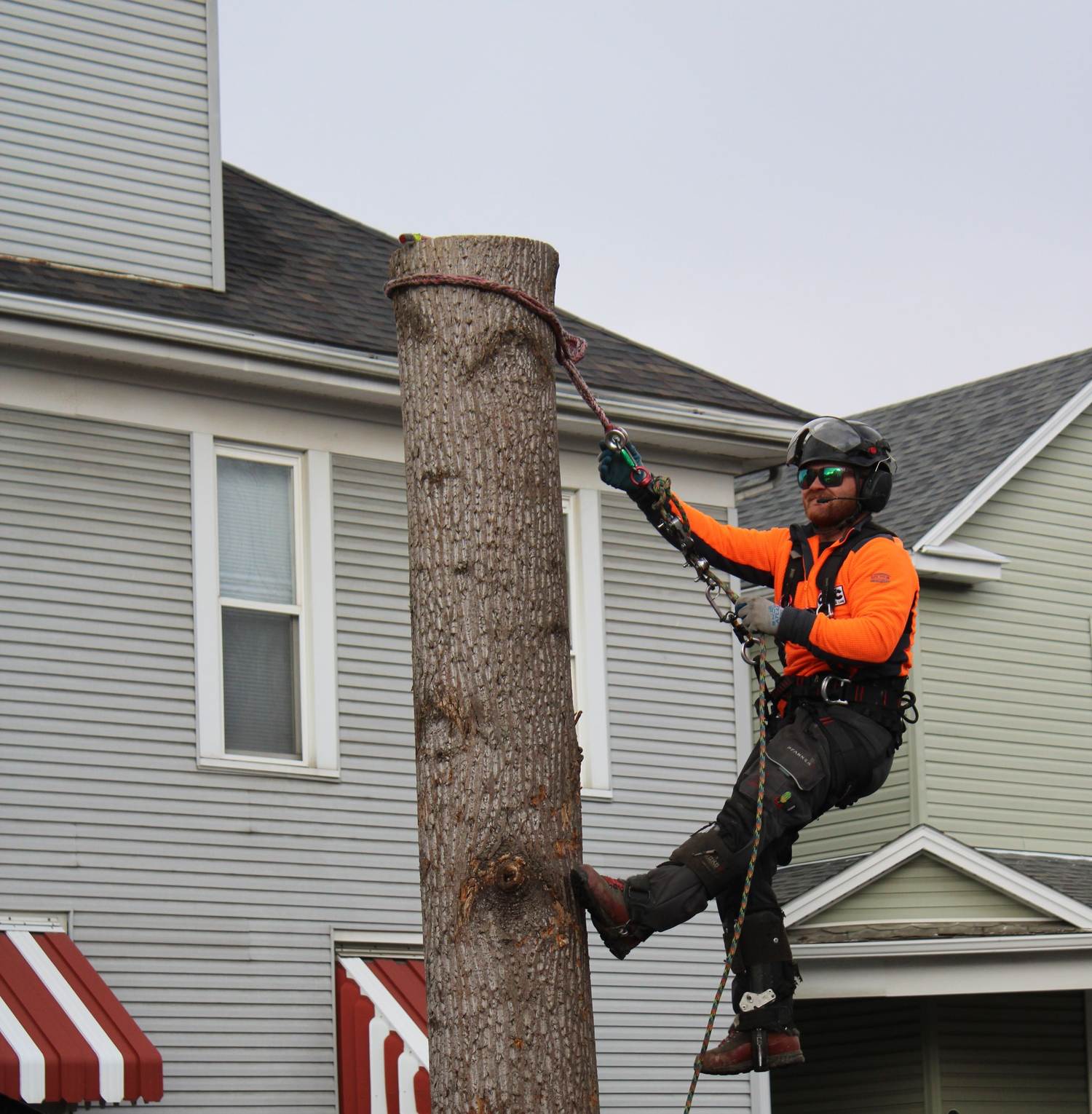
Taken down in pieces on a rope when the yard has no room to drop it, with the cage, the fence and the roof left as they were.
Is this you?
Signs a tree has to come out
It’s dead, or mostly dead
Bare crown in summer, bark coming off in sheets. Dead wood fails without warning.
It moved in the ground
Heaved soil or lifted roots on the side away from a lean, after a storm.
The trunk is hollow or split
A cavity or a crack that runs through a main union over something that matters.
How we see it
Taking a tree out of a yard it does not fit in.
Almost nothing we remove has room to be felled. The tree comes apart from the top down, in pieces small enough to control, and most of those pieces are lowered on a rope rather than dropped.
- Felled whole only where there’s a clear lane longer than the tree.
- Rigged and lowered over pool cages, sheds, fences and roofs.
- Not removed at all when two limbs are the real problem. We’ll say so.
How we do it
How a removal goes
The walk and the drop zone
We look at what’s under the tree and decide, piece by piece, what can drop and what has to be lowered.
Ropes in, from a throwline
The climber ties in above the work. Spikes only on a tree that’s coming out anyway.
Top down, in pieces
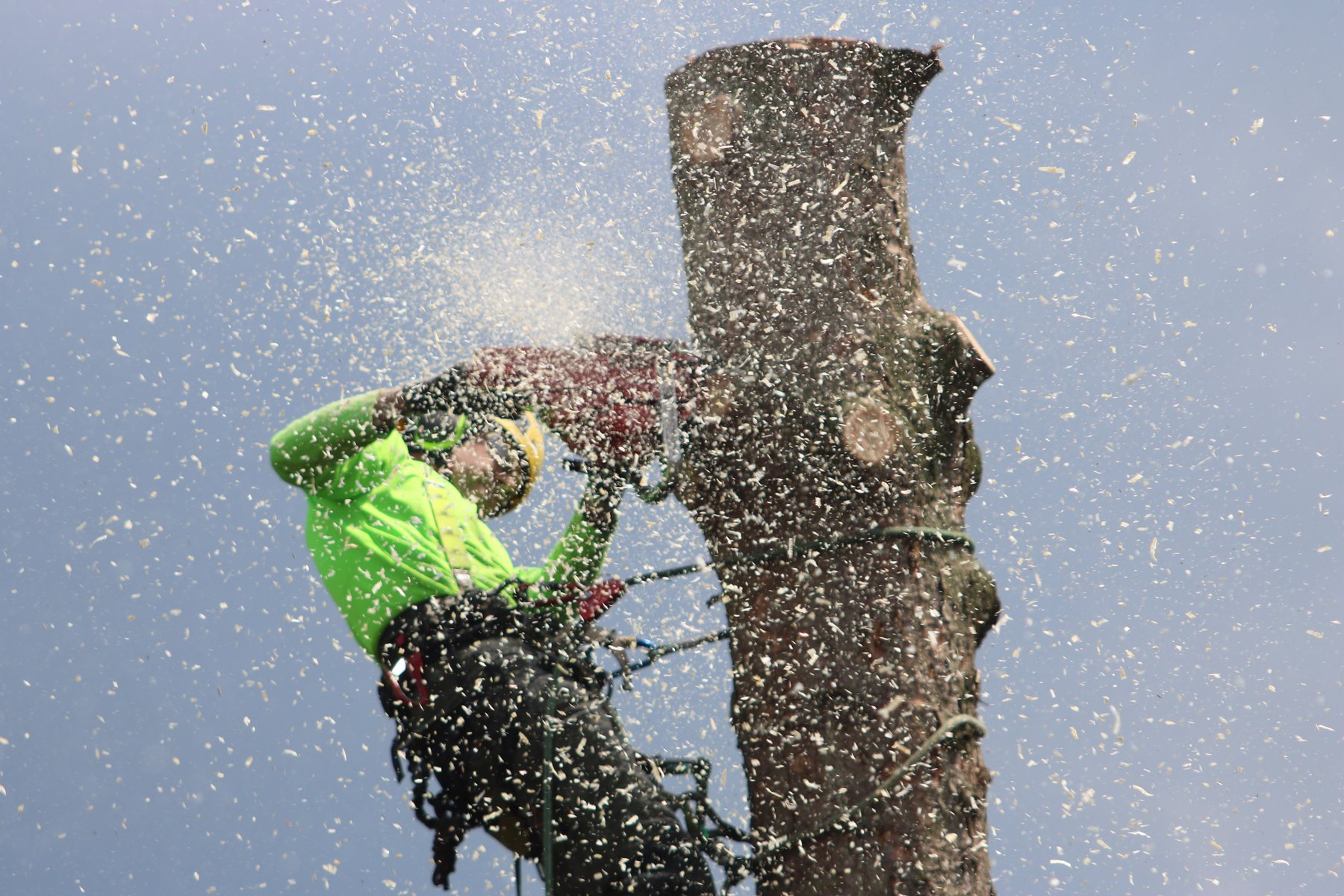
Small ends first, then limbs, then the trunk in blocks sized to be held, not cut fast.
Wood where you want it
Chipped and hauled, cut to rounds and stacked, or chips left for your beds. Stump on its own line.
What it costs
What a removal costs
Tree work is priced by risk and access far more than by height. The same forty-foot laurel oak is a two-hour job in an open lot and a full day between a cage and a roof.
Whether it can drop
Every piece that has to be rigged and lowered adds time. That is most of the price on a tight lot.
What’s underneath
A pool cage, a septic drainfield, a paver deck. Each one changes how the pieces come down.
Dead or alive
Dead wood is unpredictable to climb and can’t be trusted to hold a rigging point, so it costs more.
Access and the wood
Whether the chipper can reach, or it’s all carried out through a five-foot gate. Haul-away is its own line.
The details
For the people who want every step
Felling versus dismantling
Felling — putting a whole tree on the ground in one motion — needs a clear lane roughly the length of the tree plus a margin, on ground firm enough to take it, with an escape route for the cutter at forty-five degrees behind. In Myakka City pasture that exists. On a Bradenton lot with a pool cage, a shed and a neighbor’s fence twelve feet away, it does not, and pretending otherwise is how fences get replaced.
So the normal job is a dismantle. The climber ascends on a rope set from the ground with a throwline, ties in above the work, and removes the tree in reverse order of how it grew: small ends first, then the limbs, then the trunk in blocks. Each piece is sized so it can be held, not so it can be cut quickly.
Rigging, and what a drop zone is
A drop zone is simply the patch of ground a piece is allowed to hit. If there is one — open lawn, nothing under it, everybody clear — pieces are cut free and dropped, which is fast and cheap. If there is not, every piece is rigged: a line is set above the cut, the piece is tied, the cut is made, and the ground worker lets the load run through a friction device at the base of the tree until it stops. It can then be lowered gently onto a deck, a paver patio, or the six feet of grass between a cage and a fence.
Rigging is where the labor and the price sit. It is also where the danger sits, because a rigged piece swings, and the forces in a rope arresting a two-hundred-pound block are several times its weight. Nobody stands under it, including the person who cut it — the climber sets up so the piece cannot come back at him when it takes the line.
When we say don’t remove it
A surprising number of removal requests should be pruning requests. The tree is not dangerous, it is close, and closeness is being read as risk. If the concern is two limbs over a bedroom, reducing those two limbs is a smaller job with a better outcome, and we would rather sell you that.
The other one is the healthy shade tree that will be removed because a fence is going in. Removing a forty-year live oak so a contractor can run a straight fence line is a decision worth making deliberately, not by default, because the shade it throws on the west wall of the house is worth money every August.
The trunk, and the part that hurts people
When a leaning trunk is cut and the wood is under tension, it can split vertically and lift — the trade calls it a barber chair, and it happens in a fraction of a second at head height. It is prevented by reading the lean before the saw goes in and by boring or roping rather than back-cutting into a loaded stem. This is one of several reasons a homeowner with a rented chainsaw and a storm-damaged tree is in more danger than they feel.
What is left behind
A removal leaves a stump unless grinding is on the scope as its own line. It also leaves a hole in the canopy that the trees around it will now be exposed in. A tree that has grown its whole life inside a stand has never carried full wind on that side, and it is worth looking at its neighbors before rather than after.
Wood goes wherever you want it: chipped, cut to sixteen-inch rounds and stacked, or hauled. Chips returned to your beds are good mulch, kept two inches clear of any trunk flare.
Permits
Removal of a tree over a certain trunk diameter is regulated by most municipalities here, and the threshold, the fee and the replanting requirement all differ between Sarasota, the county, and whatever your HOA has written. Florida law also exempts removal where a qualified professional has documented a danger to people or property, with real conditions on who may write that and what it must contain.
We will tell you which of those you are in. We will not tell you a permit is unnecessary because we would like the work.
Cranes
Where a crane can reach, it is often the safest and least destructive option: whole sections are picked off and flown out over the house rather than lowered through it. It needs street access, outrigger room, and no conductors in the swing path. Most backyards here fail at least one of those, which is why this is a climbing outfit that hires a crane when the crane is genuinely the right tool.
How it’s specified on the scope
| Method | Sectional dismantle from a climbing rope, with rigging where there is no drop zone. Felled whole only where a clear lane exists. |
|---|---|
| Main cost drivers | Access for truck and chipper, what sits beneath the tree, whether pieces can be dropped, and whether the wood is dead. |
| Dead trees | Priced higher. Dead wood fails without warning under a climber and cannot be trusted to hold a rigging point. |
| Stump | Separate line, separate machine. See stump grinding. |
| Debris | Chipped and hauled, cut and stacked, or chips returned as mulch — your choice, priced separately. |
| Utilities | Anything within reach of a primary conductor is the utility’s work, not ours. |
| Neighboring trees | Assessed before removal, because a tree that grew inside a stand has never carried full wind on the exposed side. |
Questions
What people ask us about this
Will you tell me if it doesn’t need to come out?
Yes, and it happens often. A tree that’s close to the house isn’t automatically dangerous. If the worry is two limbs over a bedroom, reducing those two limbs is a smaller job with a better result, and we’d rather sell you that.
Do I need a permit?
Often. It depends on the city, the county, your HOA and the size of the tree. We tell you which of those you’re in, and we never tell you a permit is unnecessary because we’d like the work.
What happens to the stump?
It stays unless grinding is on the scope as its own line. It’s a separate machine and sometimes a separate day, so you decide at the estimate.
Can you use a crane?
Where one can reach, it’s often the safest option: sections are lifted out over the house instead of lowered through it. Most back yards here have no room for one, which is why we climb, and hire a crane when it’s genuinely the right tool.

Want somebody to look at it properly?
Tell us what the tree is doing. The owner calls you back to set a time to walk it, and nothing is priced before somebody has stood under it.
Other work