Tree service around Sarasota
Sarasota County and a short way over each line. One crew means a radius, not a call center.
The map
Sarasota, and about half an hour around it
From Bradenton and Longboat Key in the north to Venice and North Port in the south, and inland to Myakka City.
Outside that and the job is big enough to be worth the drive? Say so, and we’ll be honest about whether it is.
Town by town
What we usually find where you live
Not a diagnosis, but it tells us which question to ask first.
Sarasota
Home base. Bayfront live oaks, and a lot of laurel oak past its span.
Bradenton
Platted subdivisions, tight rear access, cage and pool work most weeks.
Venice
Older canopy, big spreading oaks over houses that were built after them.
Nokomis
Sandy lots, longleaf pine and sand live oak, and mature street trees.
Osprey
Fast regrowth on water oak. A lot of what we do here is reduction on a cycle.
Myakka City
Acreage and pasture oaks. Open drop zones, which shows up in the price.
Parrish
Rural, long drives, and wetland edges where root plates sit in wet soil.
Gulf Gate
Dense mature canopy over 1970s roofs. Clearance work, mostly.
Siesta Key
Tight lots, utility conflicts, and palms that have been hurricane-cut for years.
Longboat Key
Waterfront wind exposure and storm callbacks.
Palmetto
Just over the county line. Sand pine and laurel oak declining together.
North Port
South county. Large removals on small lots with no rear access.
What grows here
Three trees that behave very differently
Most arguments homeowners have with tree companies come from treating these as interchangeable.
Live oak
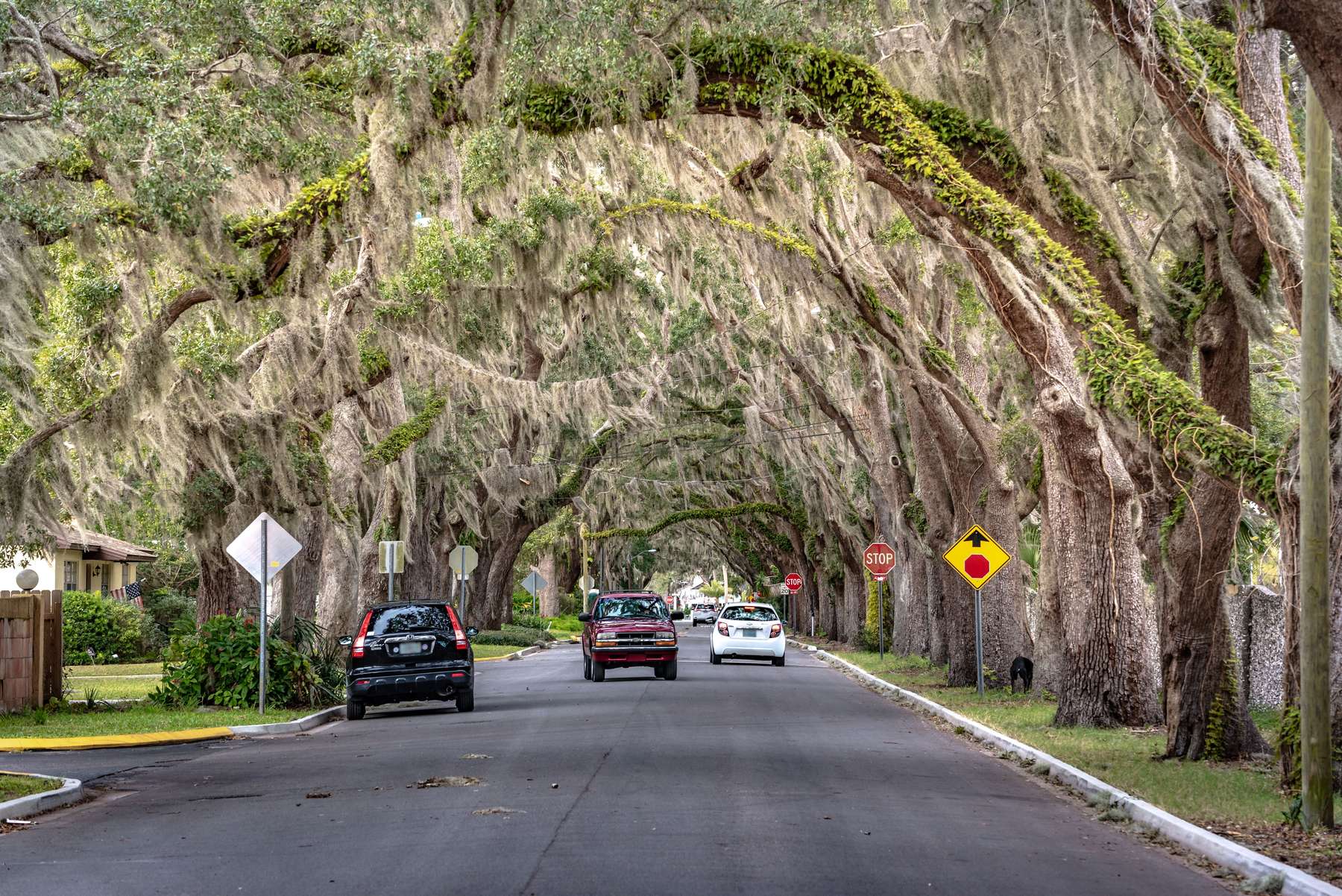
The one worth protecting. Dense, strong and wind-firm when it’s left alone, and it will outlive the house. The answer is almost always reducing two or three limbs, not cutting it back hard.
Laurel oak
Looks like a live oak and isn’t. Fast, brittle, and it often starts hollowing from the base in its fifties or sixties. Half the removals in this county are laurel oaks reaching the end of their span.
Cabbage palm
The state tree, and not a tree at all in the structural sense: it can’t seal a wound or grow a new leaf from the trunk. That’s why the palm page reads so differently.
Soils and roots
Why trees go over in storms that weren’t that strong
Most of this area is sand with a thin organic layer, and roots run shallow and wide, out past the drip line in the top foot or two. Anything trenched, graded or driven over in that zone shows up in the tree two or three years later. And a root plate in soaked soil after a week of rain holds far less than the same plate in August dust.
In one of those towns?
Tell us the street and what the tree is doing. The owner will call you back to set a time to walk it.