The haze is on the inside of the lens
That is a failed housing seal, not a surface problem, and nothing done to the outside changes it. It needs the unit resealed or replaced, and we will not charge an hour to make no visible difference.
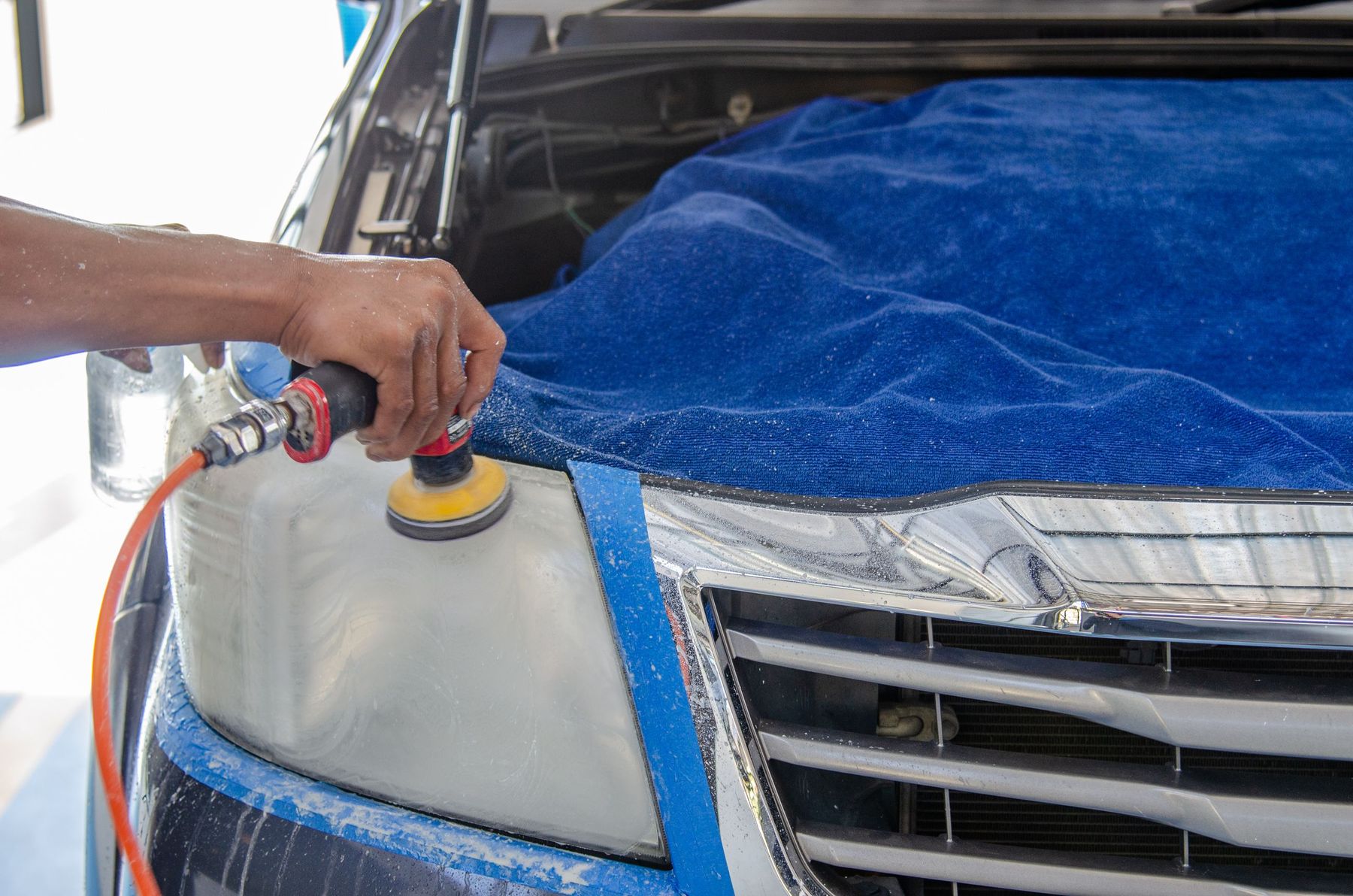
Yellow, cloudy headlights make night driving harder. We sand off the failed coating, polish the lens and lay on a new UV clear, so it stays clear.
Is this you?
The factory UV coat on top of the lens has broken down in the sun.
A hazy lens scatters the light before it reaches the road.
That’s a failed seal, not the coating. We’ll tell you, and stop.
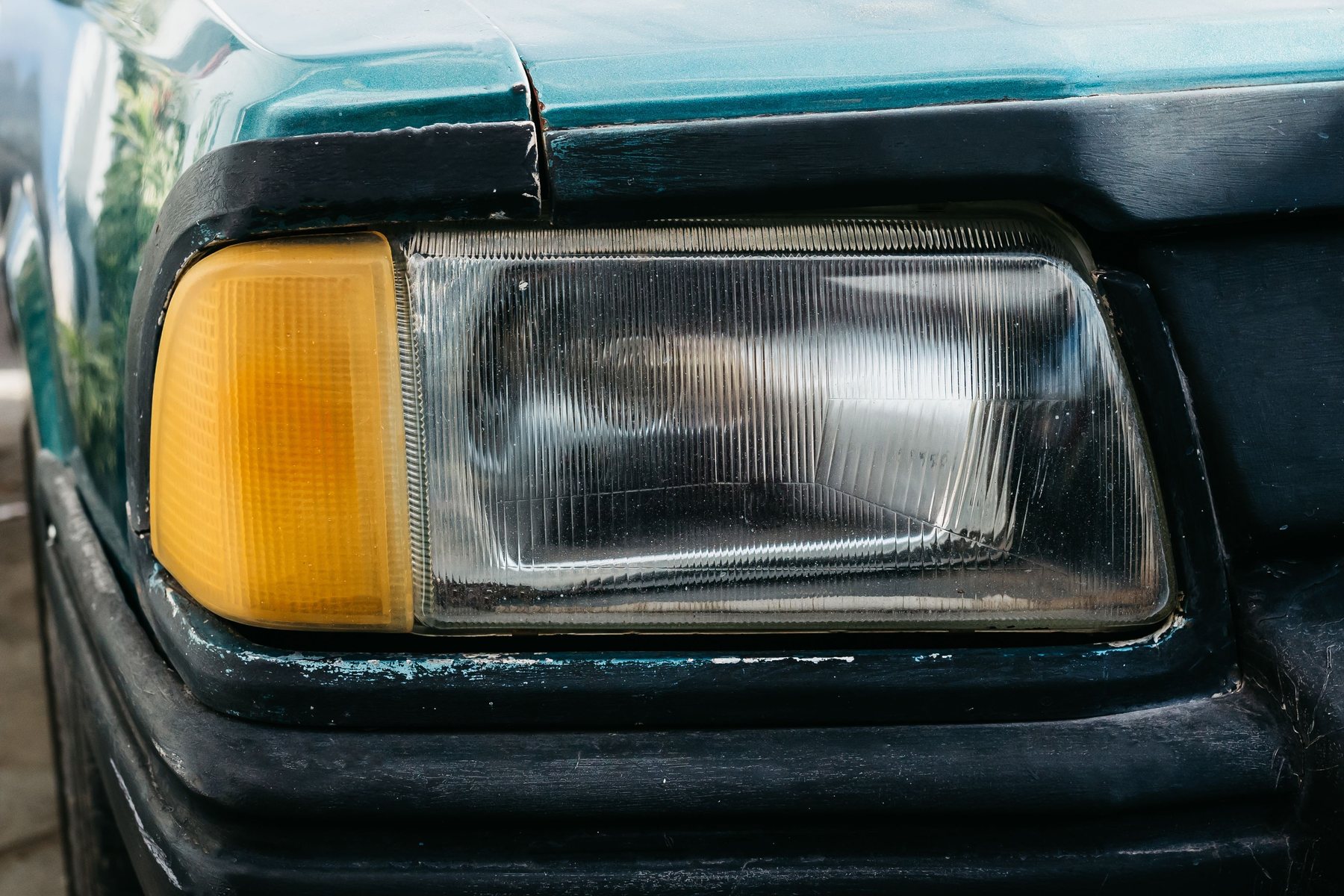
Why it comes back
Headlight lenses leave the factory with a hard UV coat. In the Florida sun it breaks down, and the lens yellows underneath.
A quick polish makes it look great for a few weeks, then it clouds again before summer. So the old coat comes off completely and a new UV clear goes on. That’s why it takes an hour, not fifteen minutes.
How we do it
Everything around the lens is masked so nothing gets scuffed.
Through the grits until the failed coating is gone.
The lens is polished until it’s clear all the way through.
A fresh protective coat, so the lens stays clear.
On the day
The van brings its own power, water and light. All it needs from you is the space below.
When we’ll say no
You hear these from your photos, before anyone drives anywhere.
That is a failed housing seal, not a surface problem, and nothing done to the outside changes it. It needs the unit resealed or replaced, and we will not charge an hour to make no visible difference.
A crack lets water and dirt in and it spreads. Sanding and coating over it hides it for a while and solves nothing. Replacement.
Perfectly clear plastic in front of a blistered reflector still gives poor light. If that is what we can see in the photographs we will tell you the restoration is not worth your money.
Both reduce or scatter light on a public road, and the glare version blinds oncoming drivers while looking brighter from the driver's seat. Not work this van does.
The details
Headlight lenses are polycarbonate, which is tough and clear and, left to itself, degrades in ultraviolet light within a couple of years. So from the factory every lens carries a hard UV coating on the outside. That coating is what fails — it goes chalky, crazes, and turns the whole lens yellow and cloudy. The plastic underneath is usually still clear and still fine.
This matters because it tells you what the job has to be. Polishing a failed coating just polishes the failure. It looks superb the day it is done, and in Florida it is chalky again inside a season, because there is now nothing at all standing between ultraviolet and the polycarbonate. A great many “headlight restorations” sold in this state are exactly that, and the customer's conclusion is that restoration does not last, when what did not last was a polish sold as one.
The old coating comes off completely. Wet sanding, starting coarse enough to actually cut through the degraded layer — usually around 800 — then stepping up through the grits, 1000, 1500, 2000, 3000, each pass removing the scratches from the last, with the lens kept wet throughout and the paint around it masked. Then a polish to bring the plastic back to optical clarity.
And then the part the job actually depends on: a fresh UV clear laid over the top. That is the new sacrificial coating, and it is why the whole thing takes about an hour a pair instead of fifteen minutes. Without it, everything before it was a countdown.
Haze on the inside of the lens, or moisture sitting in the bottom of the housing, is not a surface problem. The housing seal has failed, and the only real repairs are resealing the unit — which means removing it, and on many cars removing half a bumper cover to get at it — or replacing it. Sanding the outside of a lens that is fogged on the inside achieves nothing at all, and we will tell you that rather than take an hour's money for a lens that looks the same afterwards.
Cracked lenses are a replacement. So is a lens where the reflector behind it has gone dull or blistered, which happens with age and heat and is quite common on cars past a certain vintage: the plastic ends up spotless, the light output is still poor, and no amount of work on the outside changes that.
Tinting or smoking a headlight lens reduces light output, and on a public road that is not a styling choice we are prepared to make on somebody's behalf. Retrofitting a different bulb technology into a housing that was not designed for it produces glare that blinds oncoming drivers even when it looks brighter from the driver's seat. Neither is work this van does.
Questions
With a new UV coat, years rather than months. A polish without a coat usually clouds again within a season in Florida.
Much cheaper on most cars. If the inside of the lens is fogged or wet, though, the seal has failed and restoration won’t fix it.
Usually, yes. Tell us, because a lens that was sanded and left uncoated is worse than an untouched one, and it changes the job.
Dispatch looks at your photos and comes back with a yes, a no, or a written price, usually within the hour. The van comes to wherever the car is parked.
Other work
Bots On Staff · built for shops like yours
It asks for photographs — straight on, then a low angle with a straight edge reflecting across the damage. Somebody looks at them and comes back with a yes, a no, or a written price.
It takes a name and a number and hands it straight over. Nothing here is held, booked or confirmed, and it will not price the job.
website from $1,195, paid oncebots from $149 a month
The whole number, on the page. We build your first page free, on your own name, in 12–48 hrs — you look at it before any money moves.
It does not roll over to the next month.
Mini $49 a month (no bots) · Starter $149 a month (starting with bots) · Growth $249 a month (full bots). The website is priced on its own, paid once.
The website is yours to keep, on your own domain. The chat and the marketing stop with the service.
Thirty days’ notice, any time. No year, no lock.
One company per area. When yours is taken, it’s taken.