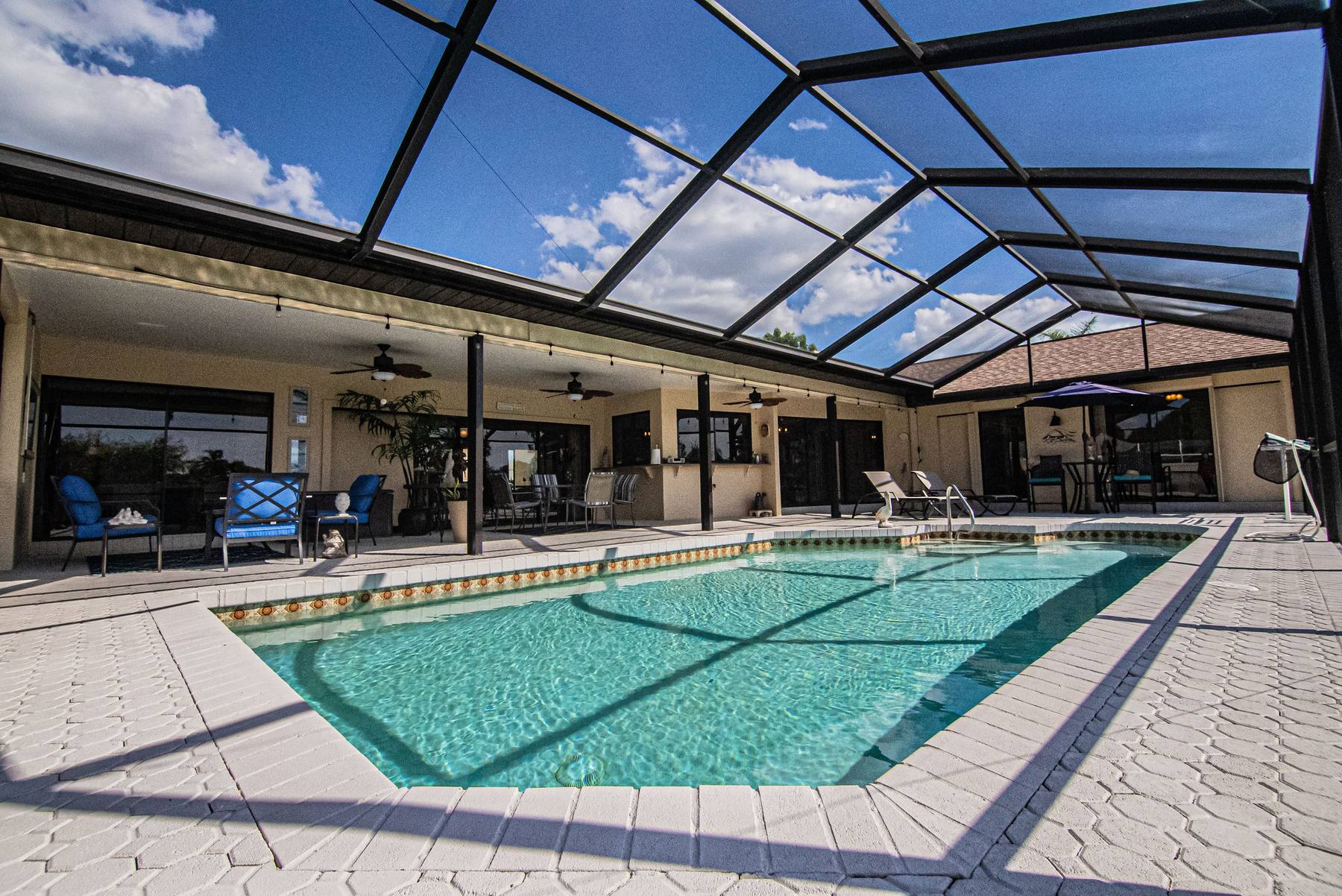
Full rescreen: every panel, every groove, new spline throughout.
A rescreen is not a big repair. It is a different job with a different method, and the parts of it that decide whether it lasts ten years or three are the parts nobody puts on a quote.
| Item | Specified as | Why it is on the sheet |
|---|---|---|
| Mesh | 18×14 std. | Named on the quote by weave, not called “screen”. 20×20 no-see-um and pet mesh priced as alternates. |
| Spline | .140 vinyl | Fresh throughout. .160 where heavier mesh needs a firmer bite. Nothing reused. |
| Grooves | Cleaned out | Every spline groove cleared of old vinyl and grit before new mesh goes in. |
| Roof panels | Same spec as walls | Unless the frame was engineered otherwise. Roof mesh is a load question, not a taste question. |
| Tension | Even, bay to bay | Flat panels, not drum-tight in one corner and slack in the next. |
| Waste | Removed | Old mesh, spline and offcuts leave with the crew. |
Everything a rescreen lasts on happens inside this groove.
The three meshes, drawn at magnification.
The trade-off is easier to see than to describe. Each square is the same size, so the openings and the strand thickness are directly comparable.
18×14 standard
Eighteen one way, fourteen the otherThe most open of the three. It stops the insects most people are trying to stop, it moves the most air, and it presents the least surface to a gust.
20×20 no-see-um
Tighter both ways, same strandSame strand, more of it. The openings close up, which is the point — and the same closing up is what takes the breeze away and hands the frame more load.
Pet screen
Coarser count, much thicker strandWoven from a far heavier strand so claws do not go through it. The strand itself is what closes the weave, so it is the densest of the three and the heaviest thing you can hang on a bay.
Read the three squares as one scale. Every step that closes the weave buys you something and charges you for it in the same move, and the frame pays the bill. That is the whole reason a mesh choice belongs to you and not to whoever is holding the quote.
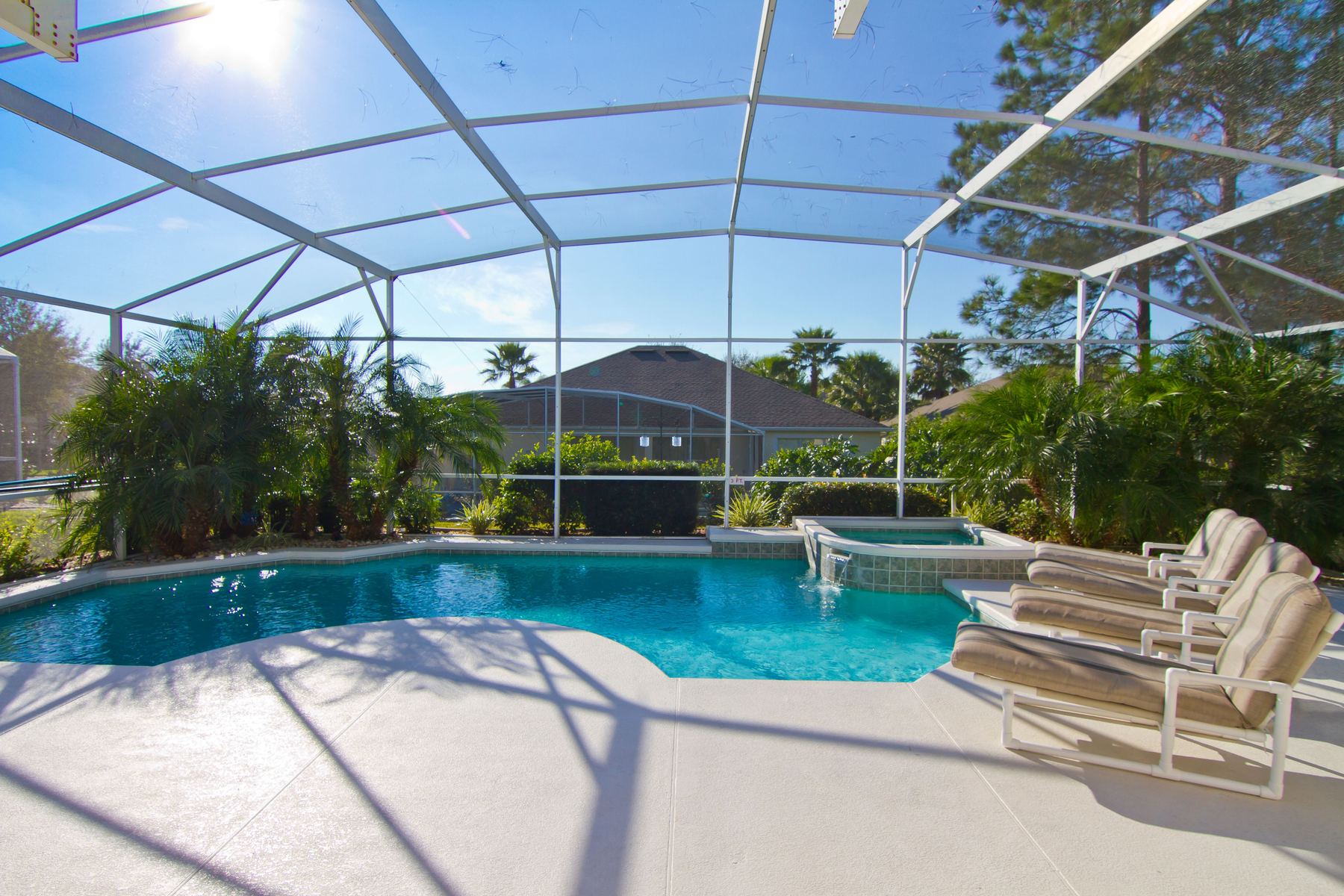
Why the whole structure at once
Mesh does not wear out where it gets touched. It wears out where the sun reaches it, and on your cage the sun has reached all of it for the same number of years. Ultraviolet light works on the coating and then on the strand itself, and the mesh loses tensile strength gradually and uniformly across the entire structure.
So the first panel to tear is not the unlucky one. It is the first of a set that have all arrived at the same place. Replace it alone and the next one goes the following season, then two more, and you have paid three mobilizations, three lots of setup and three visits to do a job that was one job.
There is also the appearance problem, and people mind it more than they expect. New charcoal mesh against twelve-year-old charcoal mesh is visibly different: darker, tighter, cleaner at the edge. One new panel in a wall of old ones does not look repaired, it looks patched.
What actually happens on the day
Old mesh is cut out and the spline pulled. Then the part that matters: the groove is cleaned. Twelve years of vinyl leaves residue, and grit packs into the corners of the channel. New spline pressed into a dirty groove sits proud, does not seat evenly, and is exactly the panel that pulls out first in a blow.
New mesh is rolled in with fresh spline, panel by panel, tensioned so the finished bay sits flat. Over-tension is a real fault, not enthusiasm — it pulls on the frame, distorts light members and puts a permanent load on a structure engineered for wind, not for a screener leaning on a roller.
Roof panels are done from above with the deck and pool protected below. If your cage has a super gutter we clear it while we are up there, because there is no better time and standing water in a gutter is a mosquito farm with a structural bill attached.
The mesh decision is yours, with the facts
18×14 is standard insect mesh and it is what most cages are screened in. 20×20 no-see-um is a tighter weave that stops the smallest biting insects — genuinely useful near water and after rain. Pet mesh is a much heavier strand woven to survive claws.
Both of the upgrades cost you airflow. A tighter weave moves less air, so the cage feels warmer and stiller on a still day, and it presents more surface to the wind, so your frame carries more load in a storm. That is not a sales caveat, it is the physics of the thing, and it is why we will not put pet mesh on roof panels of a frame that was engineered without it.
The arrangement that usually makes sense: standard mesh across the structure, and pet mesh only on the lower wall panels beneath the chair rail, where the animal actually reaches. The chair rail gives that change of mesh a clean line to stop at, so it looks deliberate rather than mended.
Things we look at while the cage is naked
A rescreen is the only time in a decade that every part of your frame is accessible and unclad. It would be negligent not to look at the rest of it, so we do, and anything found goes on the quote as a separate line you can decline:
- Base anchors. Rust weeping onto the deck, movement under load, spalled concrete around the hole.
- Splices. Beam joints that have opened, fasteners backed out, sealant failed.
- Grooves. Channels crushed or torn to the point that they will not hold spline reliably.
- The door. Racking, hinge wear, a closer set to slam, a latch that no longer catches on its own.
- Kick plates. Dented, loose, or missing entirely on a household with a dog.
1We will not put denser mesh on roof panels of a frame engineered for standard mesh.
It is the easiest upsell in this trade — large square footage, an already-convinced customer and nothing that goes wrong on a calm day. It goes wrong in a gust, where the roof acts as one large surface and the extra density is extra load on members sized without it. The dog cannot reach the roof, so the mesh up there is not even solving the problem it was bought to solve.
Where we say no, it goes on your record at $0.00 with the reason written next to it.
Get the cage counted and specified.
A rescreen quote should name the mesh, the spline gauge and what happens to the grooves. Ask us for one that does.