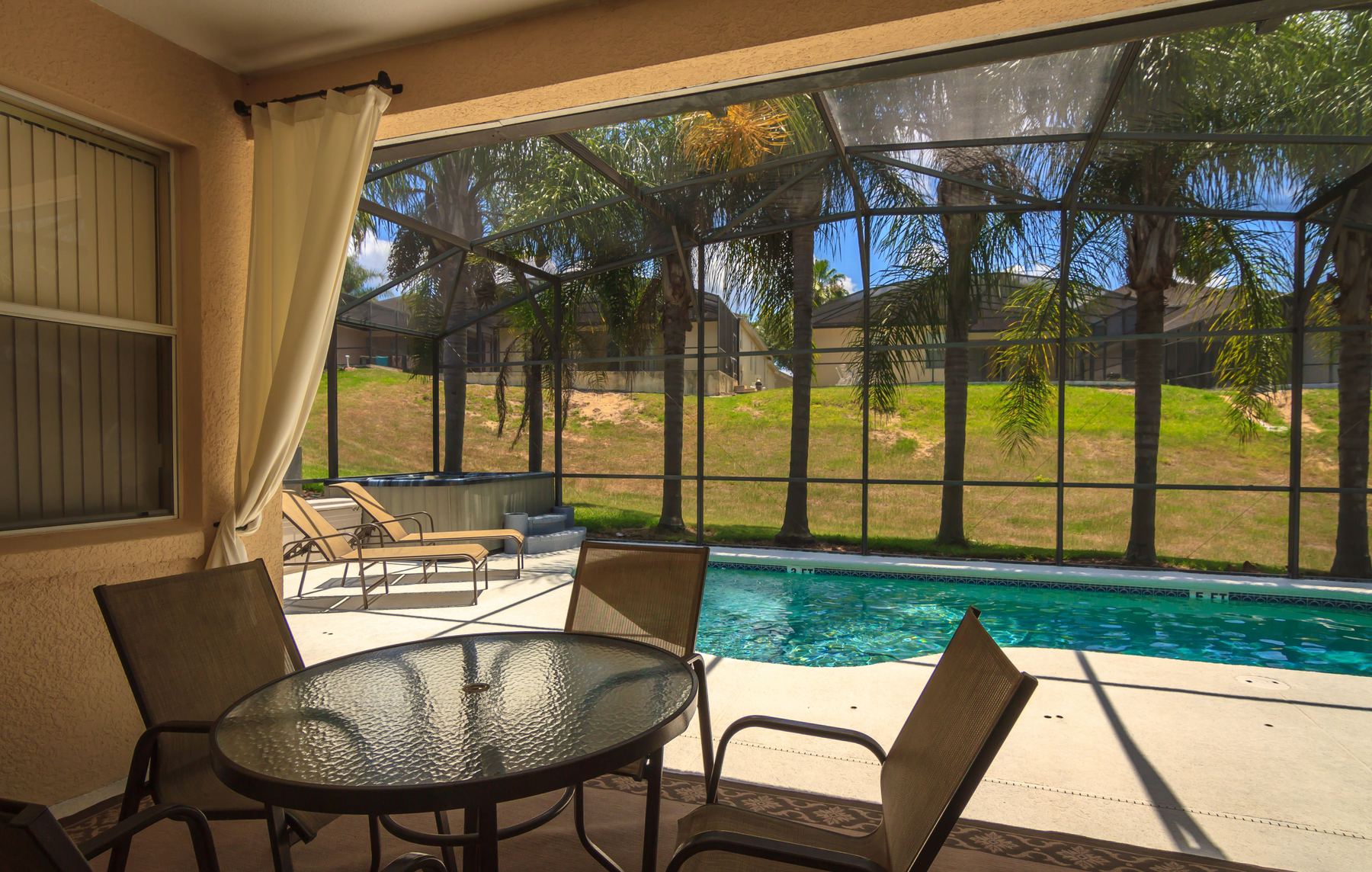
The questions we actually get asked.
Written out properly rather than in one line each, because most of them have a real answer that a one-liner hides.
Do I need a rescreen or just a repair?
Count the failures and count the years. Two torn panels on a cage under about eight years old is a repair, and doing anything more is spending money for no reason. Panels failing in more than one part of the structure, on a cage past ten or twelve years, means the mesh has reached the end of its service life everywhere at once — it has all had the same sun.
The awkward middle case is four or five panels on an older cage. There we price it both ways and put the two numbers side by side, because the repair number looks better today and the rescreen number usually looks better across three years.
Which mesh should I choose?
18×14 is standard insect mesh and it is what most cages are screened in. 20×20 no-see-um has a tighter weave that stops the smallest biting insects, which matters near water and after rain. Pet mesh is a much heavier strand that survives claws.
The trade-off is airflow and load. Tighter and heavier weaves move less air, so the cage feels warmer and stiller, and they present more surface to the wind, so the frame carries more. That is a real engineering consequence, not a sales caveat. The usual sensible answer is standard mesh across the structure with pet mesh only on the lower wall panels where an animal can actually reach — which is precisely the decision on the record on our home page.
Why did one panel tear after the storm when the rest are fine?
Usually because that panel was the weakest point and it did its job. Screen is meant to release before the frame is overloaded; the panel is the fuse. It is also common for the failure to be at the edge rather than in the middle of the mesh — which tells you it is a spline or groove problem, not a mesh problem.
Mesh torn across the middle usually means impact. Mesh that has pulled cleanly out of the groove means the spline had gone hard, or was undersized, or was reused. And if the panel let go alongside a beam that is now slightly out of line, the screen is the least of it. That is why storm work starts as an inspection of the frame and not as a screen quote.
Do I need a permit?
A straight rescreen — same frame, same footprint, mesh out and mesh in — generally does not. Replacing a screen door or a few panels does not. A new enclosure does, and it needs engineered drawings with it. Structural work sits in between: replacing beams or posts, changing the footprint, or re-anchoring the structure can all trigger a permit.
The building department in your jurisdiction is the one that decides, and the answer is not identical in every city and county. We find out before quoting, and where a permit is required we pull it and schedule the inspections rather than leaving it with you.
My screen door drags on the bottom corner. Why does it keep coming back?
Because the corners are being tightened and the actual problem is that the door has racked. A screen door is a light aluminum rectangle held square only by its corner joints, with nothing resisting diagonal movement. Every pull, slam and lean puts a little diagonal load into it, and eventually it becomes a parallelogram. The corner that drops is the bottom one diagonally opposite the hinges — always.
Snugging the corner screws pulls it back into shape for a few weeks and then it goes again, because nothing has changed about why it moved. The fix is to restore the diagonal: proper corner keys or gussets rather than tired screws, a diagonal brace or a tensioned cable across the door, the hinge stile shimmed genuinely plumb, and the closer set so the door stops rather than slams. Then it stays where you put it.
Mansard or gable roof?
A mansard has a sloped section around the perimeter and a flat top. It keeps the overall height down, uses less material, presents a lower profile to the wind, and is what most pool cages in this part of Florida are. Its weakness is the flat top: debris settles on it and it does not shed water as willingly.
A gable peaks. It sheds water and leaves properly, gives real headroom in the middle, and looks better under a two-story house where a mansard can appear squat. It costs more, it is taller, and being taller it catches more wind — which means bigger members to carry the same design wind speed.
Neither is the right answer everywhere. Span, house height, tree cover and budget decide it, and it is worth deciding before drawings are produced rather than after.
What is a super gutter and do I need one?
A super gutter is an oversized gutter section that also acts as the structural beam the roof panels attach to along the house side of the enclosure. It is not an accessory bolted on afterwards — on many cages it is genuinely part of the frame.
It matters because it handles the water coming off your roof before that water reaches the cage and the deck. Two things go wrong with them: they get installed without enough fall, so water stands in them and they breed everything, and they get filled with leaves until they overflow behind the fascia. If yours is standing water, that is a pitch problem and it needs fixing, not just cleaning.
How is a cage held down, and what actually wears out?
The posts sit on base plates fastened to the concrete deck with concrete anchors — typically wedge anchors or heavy tapcons, in the type, size and spacing the engineered drawing calls for. That anchorage is what resists uplift, and uplift is what a storm applies to an enclosure.
What wears out is the anchor, not the aluminum. The base plate sits in the wettest, most chemically aggressive place on the property: pool splash, sprinkler overspray and rainwater that wicks underneath and cannot dry. The fastener corrodes, rust expands in the hole, and the concrete around it starts to spall. By the time you can see rust weeping onto the deck, the anchor has already lost grip.
They get replaced with new anchors in fresh holes. Re-torquing a corroded anchor in a tired hole is not a repair, it just makes it feel tight for a while.
Can you match my existing frame color?
Usually close, rarely exactly. Aluminum extrusion finishes shift as they weather, so a new member next to a fifteen-year-old one is going to read as newer even when the specified color is identical. We would rather tell you that at the quote than have you discover it on the day.
The same is true of mesh. New charcoal mesh next to sun-aged charcoal mesh looks different, which is one of the honest arguments for rescreening a whole structure rather than half of it.
How long does the work take?
A typical residential rescreen is normally a day’s work for a crew, sometimes two on a large or awkward structure. Panel repairs are hours. Frame repairs depend entirely on what has to be ordered, and aluminum extrusion is not always sitting on a shelf. New enclosures are dominated by permitting and inspection scheduling rather than by build time, and we will give you a realistic date rather than a hopeful one.
Weather stops screen work. Mesh does not tension the same in the wind, and nobody should be on a cage roof in it.
Do you price over the phone?
No, and be careful with anybody who does. A price given down the phone is a guess about a structure nobody has looked at, and the way it stops being a loss for the contractor is a conversation on the day about what was “not included.”
We will happily talk through what is likely on the phone, what the mesh options mean, and whether what you are describing sounds like a panel, a rescreen or a frame problem. The number comes after somebody has stood under it.
Question that is not here?
Ring the desk and ask it. If it is a good one it will end up on this page.